
Choosing the right grain silo affects storage quality, handling costs, maintenance, and long-term farm performance. Global buyers often compare steel silos, concrete silos, hopper-bottom models, flat-bottom units, and flexible grain bags. Each design responds to different climates, capacities, loading systems, and operating budgets. A small farm near a humid coastline faces different risks than a large grain terminal in a dry inland region.
This guide examines the top 10 types of grain silos through practical buying criteria. These include moisture control, aeration, discharge speed, corrosion resistance, foundation requirements, and cleaning access. Experience from grain storage projects shows that a low purchase price can hide expensive installation or maintenance challenges. Small details matter. A blocked aeration duct can damage stored grain within days. A weak access ladder can complicate routine inspections. Reliable suppliers should provide capacity calculations, material specifications, safety information, and clear warranty terms. Independent testing and local engineering review also deserve attention.
The phrase grain sild may appear in online searches, although grain silo is the accepted industry term. Buyers should verify product descriptions carefully. Not every advertised capacity represents usable storage. Some figures exclude roof space, cone volume, or required operating clearance. This guide offers a practical comparison, but no single silo fits every site. Conditions change. Weather records, grain type, turnover frequency, and future expansion plans should shape the final decision. Mistakes are possible, especially when technical data remains incomplete. Careful questions usually prevent costly surprises.
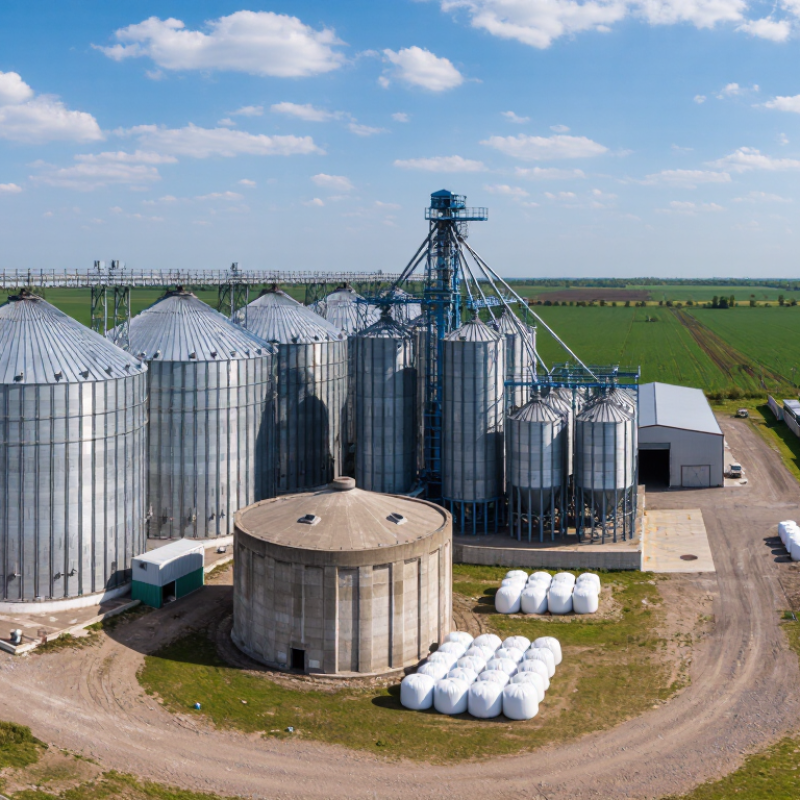
Grain silos protect harvested grain from moisture, pests, heat, and contamination.
Their main purpose is simple: preserve quality until processing, sale, or export. Common options include flat-bottom silos, hopper-bottom silos, and grain bags. Each suits different storage volumes, handling systems, and site conditions.
A reliable silo needs more than strong walls. Engineers assess local wind, snow, seismic activity, soil strength, and grain pressure. Galvanized steel supports fast installation and flexible capacity. Concrete offers thermal stability and long service life.
Hopper bottoms improve unloading, while flat bottoms often reduce construction costs. Aeration fans move controlled air through perforated floors. Temperature cables can reveal hot spots before spoilage spreads. Small design details matter.
During site inspections, I check drainage, access routes, roof vents, ladders, and discharge equipment.
Water around the foundation remains a serious warning. Operators should clean residual grain between storage cycles. They should also monitor moisture, temperature, insects, and airflow records.
Overloading is risky, even when the structure appears sound. No design is perfect. A system may meet specifications yet perform poorly with careless loading or weak maintenance. Buyers should compare capacity, cleaning access, safety features, local climate demands, and expected operating habits before choosing a silo type.
Top 10 Grain Silo Types Used by Global Buyers
Global grain demand requires storage that protects quality, controls moisture, and supports fast loading. The FAO Food Outlook, November 2024, forecast global cereal production near 2.85 billion tonnes for 2024. That volume makes storage design a commercial decision, not merely a construction choice.
The ten common options include corrugated galvanized steel silos, smooth-wall steel silos, hopper-bottom silos, flat-bottom silos, concrete silos, modular bolted silos, welded silos, on-farm grain bins, aerated silos, and temperature-controlled silos. Corrugated steel suits large-volume buyers seeking scalable capacity. Hopper-bottom models simplify unloading, while flat-bottom designs often reduce cost for long-term storage. Concrete silos provide strong thermal stability, but construction usually takes longer. Modular bolted units can enter difficult sites through narrow access points.
Performance depends on details. An aeration fan cannot correct grain harvested too wet. Temperature cables help detect hot spots, yet sensors require calibration and careful placement. The USDA Foreign Agricultural Service Grain: World Markets and Trade report regularly highlights large movements in wheat, corn, and rice, showing why loading speed and inventory rotation matter. A buyer handling feed grain may prefer hopper discharge, while a mill may prioritize low contamination and precise stock separation.
A simple ranking is tempting, but it can mislead. Local humidity, foundation conditions, power reliability, and maintenance skills often matter more than nominal capacity. Even a well-designed silo can fail operationally when operators overlook cleaning, airflow, or uneven filling.
| No. | Grain Silo Type | Typical Unit Capacity | Main Construction Material | Commonly Stored Grains | Key Advantages | Important Buying Considerations |
|---|---|---|---|---|---|---|
| 1 | Corrugated Galvanized Steel Flat-Bottom Silo | 100–15,000 metric tonnes | Bolted, corrugated galvanized steel sheets with a concrete foundation | Wheat, maize, barley, rice, sorghum | Scalable design, efficient use of vertical space, widely suitable for commercial grain storage | Requires a reliable unloading system, aeration, temperature monitoring and suitable foundation design |
| 2 | Hopper-Bottom Steel Silo | 50–5,000 metric tonnes | Galvanized or coated steel body with a conical steel hopper | Wheat, maize, oilseeds, pulses, animal feed | Fast gravity discharge, reduced residual grain and easier cleaning than a flat-bottom design | The hopper and supporting structure can increase purchase cost and foundation requirements |
| 3 | Smooth-Wall Steel Silo | 20–3,000 metric tonnes | Smooth galvanized steel or painted carbon steel panels | Rice, wheat, maize, flour ingredients, malt and specialty grains | Smooth internal surfaces support hygienic storage and help reduce material hang-up | Surface protection, corrosion resistance and cleaning access are especially important in humid environments |
| 4 | Welded Steel Silo | 100–10,000 metric tonnes | Factory-welded carbon steel or stainless steel, depending on the application | Cereals, oilseeds, processed grain products and ingredients | Good structural rigidity, reduced bolted joints and suitability for specialized storage systems | Transport limitations, welding quality, coating protection and site installation requirements affect total cost |
| 5 | Bolted Panel Steel Silo | 50–8,000 metric tonnes | Prefabricated galvanized or coated steel panels joined with high-strength bolts | Wheat, maize, rice, barley and oilseeds | Efficient shipment in sections, relatively quick assembly and flexible capacity expansion | Bolt quality, sealing, panel alignment and installation workmanship are critical to long-term performance |
| 6 | Reinforced-Concrete Grain Silo | 500–50,000+ metric tonnes | Reinforced concrete with steel reinforcement and integrated discharge equipment | Wheat, maize, rice, barley and other bulk cereals | Long service life, strong fire resistance, high durability and good protection from external weather | Needs substantial civil works, longer construction time and careful control of moisture and concrete quality |
| 7 | Precast-Concrete Silo | 500–20,000 metric tonnes | Factory-produced precast concrete sections assembled on site | Cereals, oilseeds and grain products requiring durable bulk storage | Consistent factory production, reduced on-site formwork and durable structural performance | Transport capacity, lifting equipment, joint sealing and local engineering standards must be evaluated |
| 8 | Tower Silo | 100–10,000 metric tonnes | Steel or reinforced concrete, usually with a tall cylindrical structure | Wheat, maize, barley, rice and other dry bulk grains | High storage density on a small footprint and efficient use of gravity for material flow | Requires strong foundations, suitable lifting or conveying equipment and attention to wind and seismic loads |
| 9 | Grain Bag Storage System | Typically 180–250 metric tonnes per bag | Multi-layer polyethylene storage bags placed on prepared ground | Maize, wheat, soybeans, barley and other sufficiently dry grains | Low initial infrastructure cost, rapid deployment and useful for seasonal or temporary capacity | Needs dry grain, a well-drained site, pest protection, careful bag handling and specialized unloading equipment |
| 10 | Bunker Silo | 500–20,000+ metric tonnes | Reinforced concrete walls or compacted earth walls with a sealed cover | Maize, wheat, barley and other bulk grains, particularly for short- to medium-term storage | Large ground-level capacity, straightforward loading and suitability for high-throughput operations | Requires effective moisture control, surface drainage, durable covers and suitable loading and reclaiming machinery |
Capacity figures are typical planning ranges; actual capacity depends on silo dimensions, grain bulk density, moisture content, design load, aeration requirements and applicable local standards.
Global buyers commonly compare ten silo types: flat-bottom steel, hopper-bottom steel, bolted steel, welded steel, corrugated galvanized steel, concrete, tower, dome, bunker, and modular silos. Flat-bottom models suit large capacities and long storage periods. Hopper-bottom designs discharge faster, with less manual clearing. Bolted and modular silos simplify transport and site assembly. Welded steel offers strong sealing, but installation needs skilled labor. Concrete resists fire and temperature changes, although construction takes longer.
Material choice affects service life and grain protection. Galvanized steel handles humid environments when coatings remain intact. Painted steel may cost less, yet scratches can become rust points. Concrete provides thermal stability, while bunker silos often use concrete walls and flexible covers. Tower silos save ground space but require stronger foundations and lifting equipment. Dome designs perform well in harsh weather. Capacity should match harvest volume, delivery schedules, and future expansion, not only today’s budget.
Operating systems create the practical difference. Fans and aeration ducts control moisture and reduce hot spots. Temperature cables reveal heating before spoilage spreads. Mechanical conveyors support steady loading and unloading. Pneumatic systems move grain cleanly, but they consume more energy. Hopper outlets improve flow, while flat floors may need sweep augers. I have seen buyers underestimate foundation loads and maintenance access. That mistake becomes expensive. Sensor placement also deserves review; one probe cannot represent a large silo. Even good specifications need local climate checks, operator training, and a realistic inspection plan.
Choosing a silo starts with the crop, not the catalogue. Wheat and maize usually suit galvanized corrugated, hopper-bottom, or flat-bottom silos. Rice often needs careful aeration because warm, humid kernels spoil quickly. For smaller farms, grain bags and fabric silos can reduce construction costs. They also require disciplined handling and a clean storage site. Concrete silos offer strong temperature stability, but their foundations demand serious engineering.
Climate changes the answer. In coastal regions, welded steel silos resist moisture better when coatings and seals are maintained. Cold climates may favor tower silos with reliable unloading systems and frost protection. Hot, dry areas need perforated floors, fans, and regular temperature checks. Hopper-bottom models simplify unloading and suit frequent crop turnover. Flat-bottom designs can hold large volumes economically, though removing residual grain takes more labor.
Farm scale matters. A small operation may choose a modular silo, while a commercial facility may combine tower, concrete, and steel units. Oilseeds need tighter moisture control than some cereal grains because they heat quickly. Do not oversize without a plan. Empty capacity still costs money. In field assessments, buyers sometimes focus on steel thickness and overlook airflow design. That mistake is understandable, but expensive. Check local technicians, spare parts, foundation conditions, and seasonal harvest peaks before signing specifications.
Top 10 Types of Grain Silos for Global Buyers
Global buyers usually compare ten silo types: flat-bottom steel, hopper-bottom steel, galvanized, bolted, welded, concrete, tower, modular, hermetic, and underground silos. Each design serves a different storage scale and climate. The purchasing decision should begin with grain variety, annual throughput, site wind, seismic exposure, and unloading speed. A low-cost silo can become expensive when fans, conveyors, or spare parts are unavailable locally.
Safety and reliability deserve more attention than exterior capacity. FAO’s 2023 State of Food and Agriculture reports that about 13.2% of food is lost between harvest and wholesale globally. Poor moisture control and delayed cooling contribute heavily to storage losses. Buyers should request temperature cables, aeration mapping, dust-control measures, corrosion protection, and emergency access. Electrical systems must suit local standards and dust-risk requirements. Concrete silos offer strong thermal stability, while steel silos usually provide faster installation and easier expansion. Neither option is automatically better.
Tips: Ask for tested airflow figures, not marketing estimates. Check whether sensors work in tropical humidity and freezing conditions. Review the supplier’s maintenance records and local technician network. Inspect the roof, ladder, discharge gate, and foundation drawings before signing. A spreadsheet may show capacity, but not downtime. This is where many buying plans fail. Reconsider the cheapest quotation if it excludes commissioning, calibration, or operator training.