
1-208-754-4884

Top 10 Cereal Bar Cutting Line Suppliers Worldwide

Choosing a reliable Cereal Bar Cutting Line supplier can shape production efficiency, product consistency, and long-term operating costs. This decision matters for manufacturers producing granola bars, protein bars, nut bars, and fruit-based snacks.

The top 10 suppliers worldwide are reviewed through practical criteria rather than marketing claims. These criteria include cutting accuracy, line speed, product handling, sanitation design, energy use, and equipment flexibility. A dependable system should create clean cuts without crushing delicate ingredients or pulling sticky syrups. It should also support quick format changes, accessible cleaning points, and stable performance during extended shifts.

Supplier experience matters. So does technical support after installation. Buyers should examine factory demonstrations, test samples, spare-parts availability, operator training, and response times. Stainless steel construction, guarded moving parts, and clear maintenance procedures also deserve close attention. Compliance requirements vary by market, so purchasers must verify applicable food-contact and workplace standards independently.

Not every supplier suits every factory. A high-speed line may be excessive for a small producer. A lower-cost option may create hidden maintenance expenses. That is easy to overlook. This guide compares established manufacturers while recognizing that published specifications do not always reflect daily performance. Production trials, customer references, and total ownership costs remain essential before signing a contract. The final ranking is therefore a practical starting point, not a universal verdict.
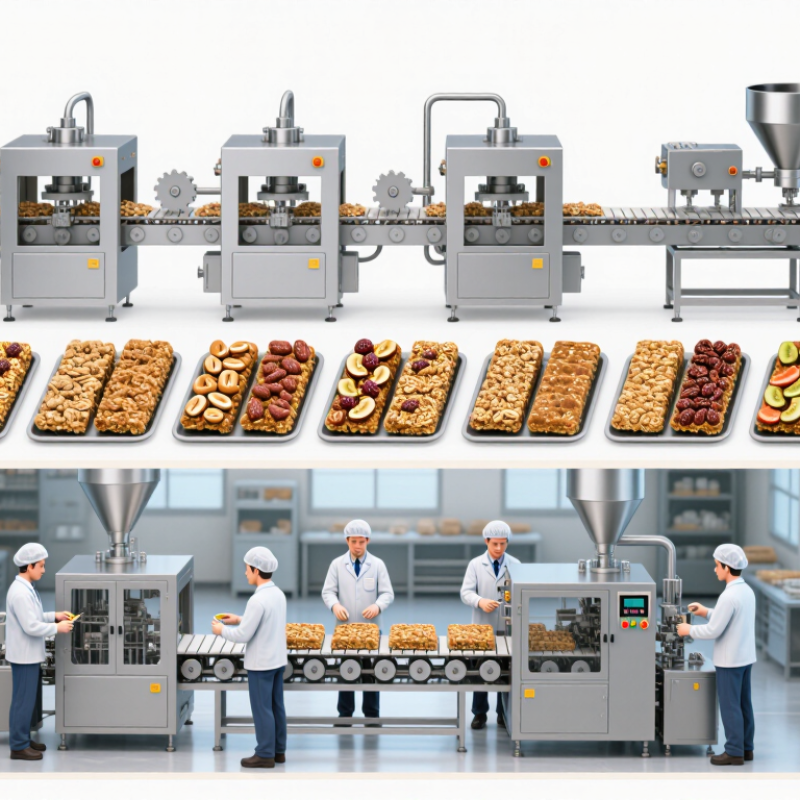
Top 10 Cereal Bar Cutting Line Suppliers Worldwide

What Is a Cereal Bar Cutting Line?

A cereal bar cutting line is an integrated system that turns a cooled slab into uniform, saleable pieces. It usually includes slab feeding, longitudinal slitting, cross-cutting, inspection, and discharge to wrapping equipment. The cutter must protect the bar’s texture while producing clean edges. Sticky syrups, nuts, dried fruit, and uneven cooling can quickly reduce accuracy.

The market gives this equipment practical importance. Grand View Research estimated the global cereal bars market at approximately USD 15.7 billion in 2023, with continued growth expected through the decade. That growth increases pressure on processors to improve yield, speed, and portion consistency. A well-designed line can reduce manual handling and maintain repeatable bar weights. However, faster cutting is not always better. Excessive blade speed may create crumbs, deformation, or product buildup.

Experienced operators usually adjust blade geometry, conveyor speed, compression, and product temperature together. Food Processing reports have repeatedly identified automation, sanitation, and changeover efficiency as major priorities in snack production. A modern line should therefore allow tool-free cleaning where possible and provide accessible contact surfaces. Small details matter. Even a slight slab-temperature change can alter cut quality. In practice, no supplier’s specification replaces testing with the customer’s recipe, because a soft fruit bar and a dense nut bar behave very differently. That is where planning can fail.

Key Features of Modern Cereal Bar Cutting Systems

Modern cereal bar cutting systems are designed for accuracy, hygiene, and steady production. Servo-driven knives maintain consistent slice lengths, even when recipes contain nuts, dried fruit, or sticky syrups. Adjustable cutting speeds help operators match the line with cooling tunnels and wrapping machines. That matters.

A strong system should include food-grade stainless steel frames, tool-free access, and smooth surfaces without hidden product traps. Optical sensors can detect bar position and reduce uneven cuts. Some machines also record speed, temperature, and downtime data, helping technicians identify recurring faults. In my experience, easy cleaning often matters more than impressive speed claims. A fast cutter becomes expensive when syrup hardens around difficult components. Noise levels, blade replacement time, and operator safety also deserve practical testing before purchase.

Tips: Request sample trials with your actual recipe. Measure cut accuracy after cooling, not only during testing. Check whether operators can change blade spacing without special tools. Ask for maintenance records, training support, and clearly defined spare-part availability. Small details matter.

No line is perfect. Sticky formulations may still create drag, especially during humid production shifts. For this reason, suppliers should explain realistic tolerances instead of promising flawless output. A reliable cutting system combines precise motion, washable construction, responsive controls, and support that remains available after installation.

Criteria for Evaluating Global Suppliers

When evaluating global cereal bar cutting line suppliers, look beyond catalog speed and attractive photographs. A reliable supplier should explain cutting accuracy, product loss, sanitation design, and expected uptime. Stainless steel contact surfaces should be easy to inspect and clean. Ask for test results using your actual bar recipe, including sticky coatings, nuts, and uneven thickness. Short trials reveal more than polished presentations.

Evaluate engineering depth through measurable details. Check cutting tolerance, conveyor alignment, blade replacement time, and format changeover. A practical factory visit can expose vibration, difficult access points, or poor guarding. Request factory acceptance testing with written criteria. Service records, operator manuals, and spare-parts lists also show operational maturity. Do not trust vague promises. Numbers need evidence.

Global support deserves equal attention. Confirm response times, remote diagnostic methods, installation training, and local technical coverage. Ask whether critical parts can arrive within your production schedule. Compare total ownership cost, not only the purchase price. Energy use, cleaning labor, rejected bars, and downtime can quietly reshape the budget. Supplier references should include similar products and comparable output levels. One weakness remains easy to miss: communication after payment. A supplier may perform well during sales discussions but respond slowly during commissioning. That risk should be tested with specific questions, documented contacts, and a realistic escalation process.

Top 10 Cereal Bar Cutting Line Suppliers Worldwide - Criteria for Evaluating Global Suppliers

Anonymized global supplier benchmark based on practical cereal-bar line selection criteria. Supplier identities and brand-specific information are intentionally omitted.

Rank Supplier Profile Primary Region Typical Line Configuration Indicative Throughput Bar-Size Flexibility Cutting Technology Typical Changeover Hygiene & Compliance Global Service Coverage Evaluation Score
1 Profile A
Integrated high-speed line builder
Western Europe Slab former, cooling conveyor, longitudinal and guillotine cutter, automatic wrapping Up to 1,200 kg/h, depending on recipe and bar dimensions 20–120 g bars; adjustable width and length tooling Servo-driven guillotine with recipe-controlled cut length 30–60 minutes with stored recipes Hygienic stainless-steel design
Food-contact materials documentation
Strong distributor and commissioning network 92/100
2 Profile B
Flexible multi-product specialist
North America Batch feed, sheeting, cooling, rotary or guillotine cutting, optional cartoning Up to 900 kg/h for standard cereal-bar recipes 15–100 g bars; supports multiple product widths Servo rotary knife or guillotine configuration 45–75 minutes, depending on product change Washdown-ready options
Designed for HACCP-based production areas
Good North American and export support 89/100
3 Profile C
High-output forming and cutting supplier
East Asia Continuous slab forming, multi-stage cooling, high-speed cross-cutting and wrapping Up to 1,500 kg/h on optimized recipes 10–80 g bars; best suited to standardized formats High-speed rotary cutting with electronic registration 40–90 minutes Stainless-steel contact zones
Optional clean-in-place features
Strong export capability; local service varies by market 87/100
4 Profile D
Modular mid-capacity integrator
Central Europe Modular slab line with cooling tunnel, cutter, flow wrapper and metal detection 300–800 kg/h 20–100 g bars; modular width adjustment Interchangeable guillotine tooling 45–90 minutes Open-frame hygienic layout
Traceable component documentation
Reliable regional support with selected overseas partners 85/100
5 Profile E
Premium custom-engineering supplier
United Kingdom and Ireland Custom recipe handling, slab former, cooling, precision cutting and secondary packaging 250–700 kg/h 15–150 g bars; broad custom tooling range Servo guillotine with integrated product-spacing control 60–120 minutes for complex recipes High specification control
Suitable for allergen-segregated layouts
Project-based international service 83/100
6 Profile F
Cost-efficient standard-line supplier
South Asia Batch mixer interface, forming rollers, cooling conveyor, cutter and wrapping machine 200–600 kg/h 20–80 g bars; limited tooling range Mechanical or servo-assisted guillotine 60–120 minutes Basic hygienic construction
Specification must be confirmed project by project
Competitive export pricing; service often partner-led 79/100
7 Profile G
Compact-line and contract-manufacturing specialist
Southern Europe Compact slab former, short cooling section, cross-cutter and semi-automatic packing 100–450 kg/h 15–70 g bars; suitable for small and medium batches Intermittent guillotine cutting 30–60 minutes Compact cleanable design
Suitable for controlled food-production rooms
Good regional support; overseas installation available 77/100
8 Profile H
Automation-focused packaging integrator
East Asia Forming and cooling line integrated with vision inspection, wrapping and case packing 400–1,000 kg/h 15–100 g bars; rapid electronic format adjustment Servo cutting with vision-based registration 30–75 minutes Automated inspection options
Digital production and traceability features
Broad export coverage; commissioning quality is project-dependent 76/100
9 Profile I
Heavy-duty industrial line supplier
North America Robust slab forming, long cooling conveyor, heavy-duty cutting and pallet-ready packing 500–1,100 kg/h 30–150 g bars; optimized for larger production runs Heavy-duty guillotine with pneumatic or servo actuation 60–120 minutes Industrial sanitation design
Supports documented preventive-maintenance programs
Strong domestic support; international service through integrators 74/100
10 Profile J
Entry-level modular equipment supplier
Southeast Asia Basic forming conveyor, cooling section, adjustable cutter and flow-pack interface 100–350 kg/h 15–60 g bars; best for a narrow product range Standard guillotine or rotary cutter 60–150 minutes Standard stainless-steel contact parts
Confirm sanitation and documentation requirements before purchase
Regional support with limited overseas coverage 71/100

Evaluation criteria: throughput suitability, format flexibility, cutting accuracy, changeover efficiency, hygienic design, documentation, automation potential, commissioning capability, spare-parts access and after-sales service. Throughput figures are indicative engineering ranges; actual performance depends on recipe moisture, binder viscosity, inclusions, bar dimensions, cooling conditions and packaging format.

Top 10 Cereal Bar Cutting Line Suppliers Worldwide

Choosing the top 10 cereal bar cutting line suppliers worldwide requires more than comparing machine prices. Reliable suppliers should provide accurate cutting, stable output, hygienic surfaces, and responsive technical support. Their equipment must handle soft, sticky, or nut-filled bars without creating excessive waste. Practical experience matters here. A cutting line that performs well during a factory trial may behave differently after several production shifts.

Strong suppliers usually offer adjustable blade spacing, automatic product alignment, and quick-change components. These features help manufacturers manage different bar sizes and recipes. Stainless steel construction supports easier cleaning and better food safety control. Documentation also deserves attention, including installation guidance, maintenance schedules, and operator training. A polished brochure is not enough.

Tips: Request sample testing with your own cereal mixture. Measure cutting accuracy, product loss, cleaning time, and noise levels. Ask for references from facilities with similar production volumes. Check spare-part availability in your region. Small delays can stop an entire packaging line.

No ranking is perfect. Supplier performance can change with local service quality, project complexity, and communication. I would compare at least three technical proposals before choosing one. A lower purchase price may hide higher maintenance costs. The best choice is the line that delivers consistent cuts, clear support, and dependable operation over time.

How to Choose the Right Supplier for Your Production Needs

Top 10 Cereal Bar Cutting Line Suppliers Worldwide

How to Choose the Right Supplier for Your Production Needs

The global cereal bar market was valued at about $15.7 billion in 2023, according to Grand View Research. Its projected growth increases pressure on manufacturers to improve speed, consistency, and flexibility. When comparing suppliers, start with your actual recipe and production target. A line designed for soft, sticky bars may perform poorly with dense, nut-rich products.

Ask for measured results, not attractive demonstrations. Check cutting accuracy, line speed, product temperature, and changeover time. For example, a supplier should explain whether the line can maintain a two-millimeter target cut at your required output. Request factory acceptance testing with your ingredients. Include syrup viscosity, inclusions, bar height, and packaging dimensions. Small details matter.

Hygienic design deserves equal attention. Stainless-steel contact parts, tool-free access, and effective washdown procedures can reduce contamination risks. ISO 22000-based food safety systems also support stronger supplier evaluation. FAO data indicates that 13.2% of food was lost before retail in 2021, so reducing rejects has practical value. Review the supplier’s spare-parts plan, remote support, and operator training. A polished demo is not enough. I would also question unusually high output claims. Real production often includes stoppages, cleaning, and recipe changes. Measure OEE during a full shift, not during a perfect hour.

Top 10 Cereal Bar Cutting Line Suppliers Worldwide – How to Choose the Right Supplier for Your Production Needs

The chart presents a practical 100-point evaluation model for comparing cereal bar cutting line suppliers. Production capacity, cutting accuracy, product changeover, food-safety compliance, after-sales support, and total cost are weighted according to their impact on operating performance and long-term purchasing decisions.