Ozone Controller Innovations at 2026 Canton Fair for Global Buyers?
The 2026 Canton Fair promises exciting innovations, particularly in the Ozone Controller sector. This biennial event, spanning from April 15 to May 5, features cutting-edge technologies aimed at enhancing global trade. With a focus on advanced manufacturing and new materials, buyers can discover various products designed to improve air quality and efficiency.
Ozone controllers are gaining traction in markets worldwide. These devices play a crucial role in maintaining environmental standards and promoting healthier living. Many manufacturers are showcasing their latest designs at the fair, targeting buyers looking for sustainable solutions. However, the competition is fierce. How can one stand out?
The integration of AI for smart navigation and supplier selection enhances this experience. Buyers can filter suppliers based on certifications like ISO and CE. This technological advancement boosts efficiency, but it also raises questions. Is relying heavily on AI reducing personalized interactions? Navigating a massive exhibition space of 1.55 million square meters is remarkable, yet one wonders about the human aspect of trade. As innovations evolve, the balance between technology and human connection requires reflection.
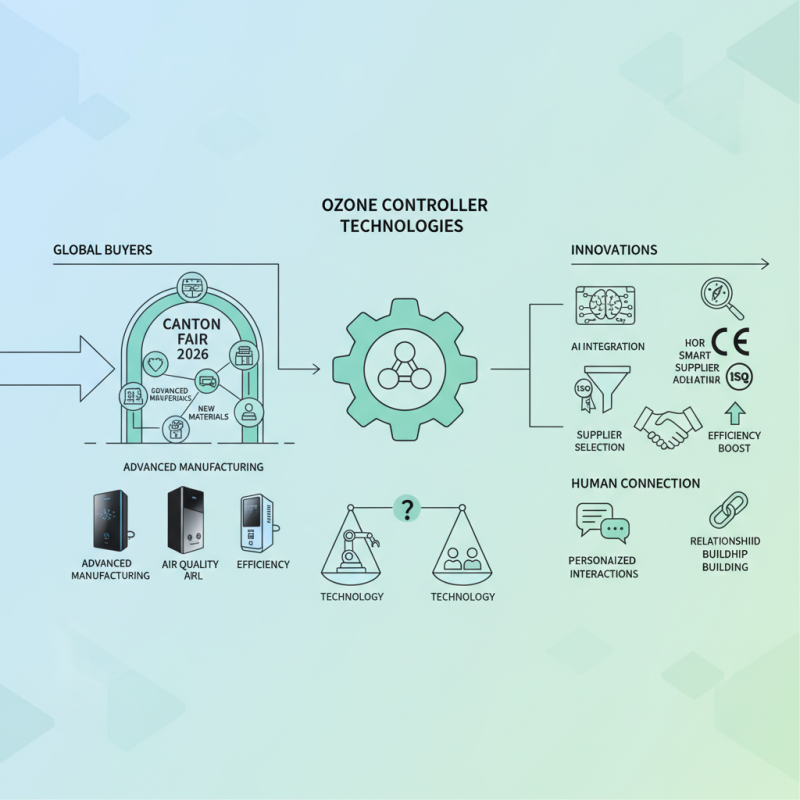
Innovations in Ozone Controllers: Key Highlights from the 2026 Canton Fair
The 2026 Canton Fair showcased several exciting innovations in ozone controllers. Buyers from around the globe noticed a focus on efficiency and sustainability. Many products featured new designs that integrate advanced technology. One standout was a compact model designed for residential use. Its small footprint doesn't compromise its performance.
Another innovation was a user-friendly interface. This made adjustments easy for anyone, regardless of technical expertise. One manufacturer demonstrated how simple it is to modify settings. However, some visitors pointed out that clearer instructions could enhance this feature.
Several ozone controllers showed promise in air purification and odor removal. There were also models aimed at industrial applications. These devices could handle larger spaces but seemed complex to operate. Attendees were eager to learn more but noted that training materials were slightly lacking. Overall, the fair highlighted significant advancements in ozone technology, but a few areas still require improvement.
Innovations in Ozone Controllers: Key Highlights from the 2026 Canton Fair
Market Trends: The Growing Demand for Ozone Technology in 2026
The demand for ozone technology is rising significantly in 2026. Recent reports indicate that the global ozone generation market is expected to surpass $1 billion by the end of this year. This growth is driven by ozone's effectiveness in water treatment, air purification, and food safety. Many industries now recognize its potential. These factors lead to increased interest at the Canton Fair.
A study highlights that the ozone market has seen a compound annual growth rate (CAGR) of over 7% in recent years. This trend suggests a robust appetite for innovations in ozone controllers. Buyers are keen to explore the latest advancements. There are innovations in efficiency and usability. However, some challenges remain. The technology can be costly for small businesses. Integration with existing systems can be complex.
Ozone technology also faces awareness issues. Not every buyer understands its benefits. Some still question its safety and effectiveness. Feedback indicates a need for better education and clearer product information. As demand grows, resolving these concerns is critical. This year’s Canton Fair presents an opportunity for companies to address these topics. Engaging discussions could lead to improved market understanding and wider adoption.
Technical Advancements: Features of Next-Gen Ozone Controllers
The 2026 Canton Fair is set to showcase innovative advancements in ozone controllers. These devices have gained attention for their efficiency and environmental benefits. The next-generation ozone controllers feature smart technology. This allows for precise monitoring and adjustment of ozone levels. Users can expect user-friendly interfaces, promoting seamless operation.
One notable advancement is energy efficiency. Unlike older models, new controllers consume less power while maintaining performance. Additionally, real-time analytics are integrated into these devices. This feature enables users to track usage patterns closely. However, some challenges remain. Not all buyers may fully understand the technical specifications. Misinterpretation can lead to suboptimal usage.
Moreover, the durability of components is critical. Manufacturers aim for enhanced longevity, reducing the need for replacements. However, this ambition can lead to higher upfront costs. It's a balancing act between quality and affordability. As global demand increases, manufacturers must address these needs. The evolving landscape of ozone technology continues to present opportunities for improvement.
Global Supply Chain: Opportunities for International Buyers in Ozone Industry
The 2026 Canton Fair will showcase several innovations for ozone controllers, highlighting opportunities for global buyers. The ozone market is projected to grow significantly, with a focus on sustainable solutions. According to a recent report by Markets and Markets, the global ozone generator market is expected to reach $1.7 billion by 2025, growing at a rate of 4.5% annually. This growth underscores the rising demand for ozone in water treatment, air purification, and food processing.
International buyers attending the fair will find a wide range of products. Ozone technology is becoming a crucial part of the global supply chain, driven by environmental regulations. Companies are investing in advanced ozone systems that ensure higher efficiency and lower operational costs. However, challenges remain. Adapting these technologies to local needs can be difficult. Many buyers may lack experience with ozone applications.
Moreover, while the supply chain for ozone products is robust, fluctuating raw material costs pose risks. Buyers should carefully evaluate supplier capabilities and technology reliability. Understanding market trends is essential. The fair provides a crucial platform for networking and collaboration, but success requires proactive engagement. Balancing innovation with practical implementation will be key for buyers navigating this evolving industry.
Sustainability Impacts: Ozone Controllers in Reducing Environmental Footprint
The rise of ozone controllers signals a shift towards sustainable practices in various industries. Recent studies show that these devices can reduce pollutants by up to 90%. This dramatic decrease can significantly lower a facility's environmental footprint. The potential reduction in harmful emissions is a game-changer for many sectors.
One report highlights the role of ozone controllers in water treatment. They can produce pure water without harsh chemicals. This method not only protects aquatic ecosystems but also enhances water safety. However, the initial investment may deter some businesses. While the long-term benefits are clear, the upfront costs raise concerns. Companies must weigh these factors.
Moreover, ozone controllers can improve air quality in industrial settings. Some reports indicate a 50% reduction in airborne contaminants. But, challenges remain. Effective monitoring and maintenance are essential. Without proper care, these systems may not function as intended. This oversight could undermine their environmental advantages. The industry must address these issues to truly benefit from ozone technology.