2026 How to Choose the Best Valve DC Gear Motor for Your Needs?
Choosing the right Valve DC Gear Motor is crucial for various applications in automation and robotics. According to a recent industry report from ResearchAndMarkets, the global gear motor market is expected to reach $19.9 billion by 2026. This highlights the growing demand for efficient and reliable motor solutions. Selecting the best valve DC gear motor requires careful consideration of several factors.
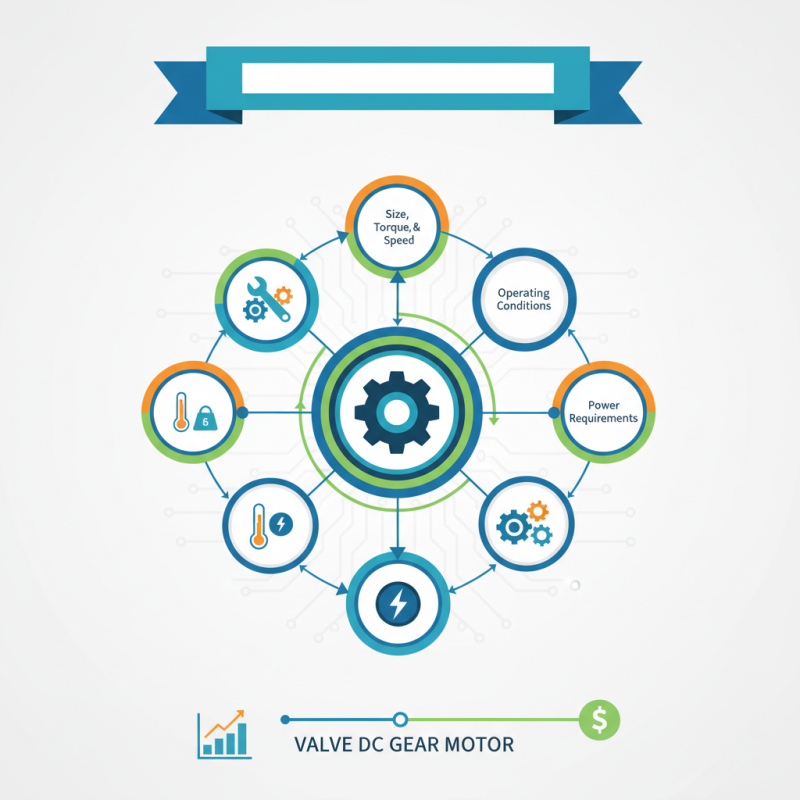
The size, torque, and speed specifications of gear motors play a vital role in their performance. For instance, a higher torque rating often enhances operational efficiency. However, opting for a motor with excessive torque may lead to compatibility issues with your application. Additionally, understanding the operating conditions, such as temperature and load, is essential. Manufacturers often provide data sheets that detail these specifications, but interpreting them can be challenging.
Evaluating power requirements is another step that cannot be overlooked. Insufficient power can cause underperformance, while excessive power may lead to mechanical failure. As the industry evolves, the availability of innovative technologies in valve DC gear motors continues to increase. However, this rapid development raises the question of how well these technologies mesh with existing systems. It remains vital to reflect on these aspects to make an informed choice.
Understanding the Basics of Valve DC Gear Motors in 2026
In 2026, understanding valve DC gear motors is crucial. These motors combine electric power with gear reduction to control valve positions effectively. They are commonly used in automation systems, ensuring precise movements. Not all motors are created equal. Choosing the right one depends on the application’s needs.
Consider the torque requirements of your project. A motor must provide enough torque to operate the valve under all circumstances. Also, explore different gear ratios. Some offer quicker movement but less torque. Others provide steady force at a slower pace. Too often, users overlook these critical details and face performance issues later.
Pay attention to power supply specifications. If you choose a motor that doesn’t match your voltage requirements, it will fail. Additionally, noise levels are often an afterthought. A noisy motor can disrupt operations. Reflect on these factors before making a decision. It can save time and resources in the long run.
2026 DC Gear Motor Specifications Comparison
Key Specifications to Consider for Valve DC Gear Motors
When selecting a DC gear motor for valve applications, there are critical specifications to consider. Start with torque requirements. Torque is crucial for operating heavy valves reliably. A report by the International Journal of Advanced Manufacturing Technology indicates that insufficient torque can lead to valve failure, wasting time and resources. Make sure to assess your valve's weight and operating conditions before deciding.
Next, consider the motor speed. The speed directly affects responsiveness. Many applications need fast adjustments under varying loads. According to a recent industry survey, 40% of professionals reported slow motor responses as a frequent issue. This can compromise system performance. Choose a motor speed that meets your specific application needs.
Another vital factor is size and weight. Space constraints can limit your options, so you need compact designs. The right size contributes to easy installation and maintenance. Reports have shown that 30% of motor failures are linked to improper sizing. Lastly, evaluate the gear ratio. A suitable gear ratio ensures optimal performance. An incorrect gear ratio may hinder efficiency, leading to increased energy consumption. Each of these specifications plays a distinct role in achieving reliable operation.
2026 How to Choose the Best Valve DC Gear Motor for Your Needs?
| Specification | Description | Importance |
| Voltage | Operating voltage for the motor | Critical for compatibility with power supply |
| Torque | Maximum torque output of the motor | Determines the strength of the motor |
| Speed | RPM (Revolutions per minute) | Affects the operation speed of valve |
| Gear Ratio | Ratio of input speed to output speed | Impacts torque and speed balance |
| Efficiency | How much input power is converted to output power | Higher efficiency implies less energy loss |
| Load Capacity | The maximum load the unit can handle | Essential for operational reliability |
| Size & Weight | Dimensions and weight of the motor | Affects installation and operation space |
| Operating Temperature | Temperature range for safe operation | Vital for application in harsh environments |
Evaluating Torque and Speed Requirements for Your Application
When evaluating torque and speed for a valve DC gear motor, first consider the specific requirements of your application. Torque is the rotational force the motor can deliver. It’s crucial for both starting and maintaining motion. Approximately 75% of electric motor failures are related to insufficient torque. Evaluating the exact torque requirement can help prevent such issues.
Speed is another essential factor. Gear motors often come in various speed ranges. Selecting a motor that does not meet these needs can hinder operational efficiency. For example, if a motor operates too slowly or quickly, it might not fulfill the task effectively. Data from industry reports indicate that operational speed impacts productivity by 25% or more in industrial settings.
In many scenarios, it’s common for users to underestimate torque and speed needs. A mismatch can lead to performance losses or mechanical failures. Users should not only focus on specifications but also on the working conditions. High temperatures, load variations, and the overall environment can shift a motor’s performance. Always re-evaluate your choices regularly to ensure they align with the evolving demands of your application.
Comparing Motor Efficiency Ratings and Power Consumption
When selecting a valve DC gear motor, efficiency ratings are crucial. Efficiency determines how well the motor converts electrical energy into mechanical energy. A higher rating often results in lower power consumption, which is vital for long-term cost savings. Consider motors with efficiency ratings above 80%. These motors usually provide better performance in various applications.
Power consumption also matters significantly. Look at the motor’s rated voltage and current. A motor with lower voltage requirements will typically consume less power. Additionally, check the gear ratio. A higher gear ratio can enhance torque while reducing speed. However, this may lead to inefficiencies if not matched with the right application.
Don't ignore the importance of heat generation. High power consumption often leads to increased heat. Excessive heat can shorten the motor's lifespan. Therefore, take time to analyze data sheets. Ensure you understand how the motor will perform under load. The right motor should balance efficiency, power consumption, and durability, but finding that perfect fit can be challenging.
Selecting the Right Gear Ratio for Optimal Performance
When selecting a DC gear motor, the gear ratio plays a vital role in its performance. A lower gear ratio provides higher torque but decreases speed. Conversely, a higher gear ratio increases speed but reduces torque. Choosing the right gear ratio is crucial for your specific application, whether it's robotics, conveyor systems, or other machinery.
Tips: Consider the load your motor will handle. If your application requires a heavy load, opt for a lower gear ratio. This choice will ensure the motor can handle the strain without stalling.
Another important aspect is the environment where your motor operates. In a constrained space, a compact gear motor with an appropriate ratio will perform better. However, initial tests often reveal that the selected ratio could be too high or too low. It requires adjustments based on real-world performance.
Tips: Test different gear ratios in your application. Sometimes, the perfect ratio is not the one you initially believed. Monitor how the motor responds under various conditions. It’s a process that often brings unexpected insights.