What is Continuous Screw Pyrolysis Plant and Its Benefits?
The Continuous screw pyrolysis plant is revolutionizing waste management. This technology is designed to convert various waste materials into valuable resources. In recent years, the global pyrolysis market has seen significant growth. According to a report by MarketsandMarkets, it is expected to reach $50.8 billion by 2026.
Continuous screw pyrolysis plants offer several advantages. They provide a consistent and efficient way to process waste. This technology ensures a continuous feed, optimizing production. A study by the International Journal of Environmental Science and Technology highlights that pyrolysis reduces landfill waste by up to 90%.
The operational efficiency of Continuous pyrolysis plants can lead to substantial energy savings. However, there are challenges, such as initial setup costs and the need for skilled operators. Despite these obstacles, the benefits are clear. This technology can support renewable energy goals and move toward a circular economy.
What is a Continuous Screw Pyrolysis Plant?
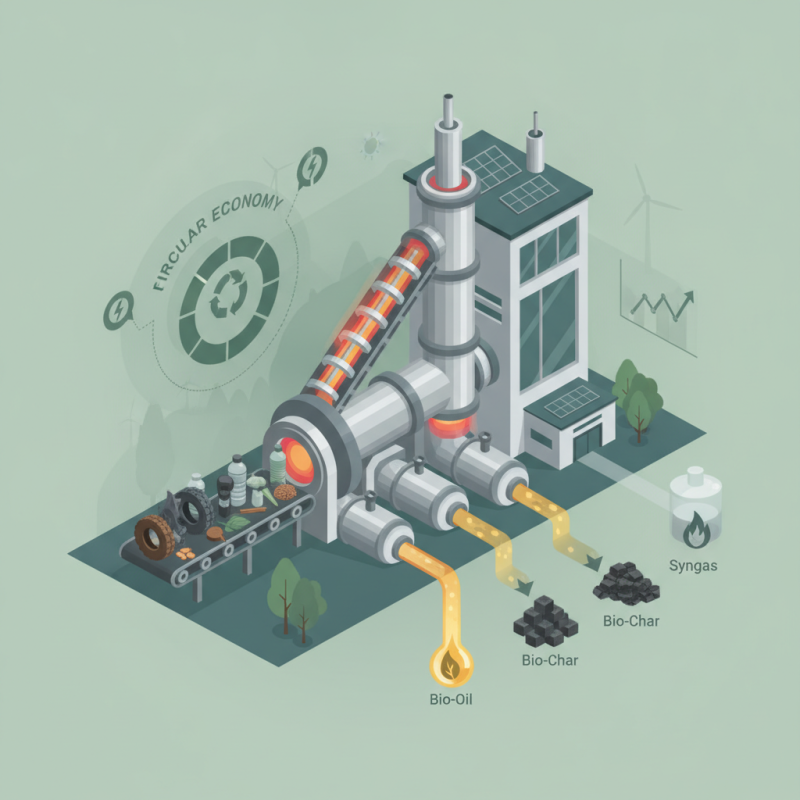
A continuous screw pyrolysis plant is an innovative technology for converting waste into reusable products. This system uses a continuous feed mechanism, allowing materials to be processed without interruption. The main components include a screw conveyor, reactor, and condensing system. These parts work together to break down organic materials at high temperatures.
The pyrolysis process involves thermal decomposition in the absence of oxygen. As feed materials move through the reactor, they are heated and transformed into gases and oils. The solid residue can be char, which can be used as a fuel or soil amendment. It’s a clean and efficient way to manage waste while producing valuable resources. This technology appeals to industries looking for sustainable waste management solutions.
While the continuous screw pyrolysis plant offers many benefits, several considerations are essential. The design must ensure proper temperature control to maximize output. In addition, operators must frequently monitor the feed quality. Variations in material composition can affect efficiency. These challenges highlight the need for skilled professionals to maintain optimal operations.
What is Continuous Screw Pyrolysis Plant and Its Benefits?
| Dimension | Description | Benefits |
| Process Type | Continuous screw pyrolysis involves the thermal decomposition of organic material in an oxygen-free environment using a screw conveyor. | Efficient recycling of materials results in reduced waste and maximized resource recovery. |
| Operating Temperature | Typically operates at temperatures between 300°C to 800°C for optimal yields. | High temperatures facilitate better conversion rates and higher quality end products. |
| Product Output | Produces biochar, bio-oil, and syngas as main outputs. | Versatile products that can be used for energy generation, soil enhancement, and as feedstock for chemical production. |
| Environmental Impact | Helps in reducing landfill waste and emissions. | Promotes a circular economy by turning waste into valuable resources. |
| Investment Cost | Initial setup costs can vary significantly based on scale and technology. | Long-term savings through waste management and energy generation can offset initial costs. |
Key Components and Mechanisms of Continuous Screw Pyrolysis
Continuous screw pyrolysis plants represent an innovative approach to waste management. The primary components of these systems include a feed hopper, reactor, and condenser. A key feature is the screw conveyor, which aids in the steady movement of feedstock. This design enables continuous processing, allowing for larger volumes of waste to be treated efficiently. According to the Global Pyrolysis Market Report, the demand for such technology is expected to grow by 9.9% annually from 2021 to 2028.
The mechanism operates at high temperatures, typically ranging from 350°C to 700°C. The organic materials decompose into syngas, bio-oil, and char. The continuous nature of the process enhances thermal efficiency and reduces downtime. Researchers found that this method can convert 70% of feedstock into valuable products, making it a financially attractive option. However, there are challenges in optimizing material consistency for different feedstocks, which can impact yield.
While continuous screw pyrolysis plants offer various benefits, the technology is not without concerns. Issues such as scaling and maintenance can arise, potentially affecting operations. Some plants report inefficiencies when processing heterogeneous feedstocks. Continuous improvement in process control and material input could help overcome such limitations and enhance overall reliability.
Benefits of Continuous Screw Pyrolysis Plant
Advantages of Continuous Screw Pyrolysis over Traditional Methods
The Continuous Screw Pyrolysis Plant offers numerous advantages over traditional pyrolysis methods. One key benefit is its efficiency. A continuous system processes feedstock without interruption, resulting in higher throughput. This means more materials can be converted into useful products, like fuels and chemicals. Traditional batch methods require time for cooling and restarting, slowing down overall productivity.
Another notable advantage is the optimized energy consumption. Continuous processes benefit from better heat retention and control. This leads to less energy waste, making the process more sustainable. Additionally, the output quality can be more consistent. In a continuous setup, parameters remain stable, ensuring uniform product characteristics.
However, this method has its challenges. Implementing a continuous system can require significant upfront investment. Operators must also be well-trained in handling equipment. Transitioning from traditional methods to a continuous one may involve a steep learning curve. Ultimately, refining these processes will enhance their effectiveness, making them a promising option for waste management and resource recovery.
Applications of Continuous Screw Pyrolysis in Waste Management
Continuous screw pyrolysis is an innovative waste management solution. It converts various organic waste into valuable products. This method effectively reduces the volume of waste while generating energy.
In waste management, continuous screw pyrolysis finds numerous applications. It processes plastics, food waste, and biomass. This technology can create biofuels and char. These products can be utilized in energy production or as soil amendments. The process also minimizes environmental pollution by reducing landfill use.
Tips: Consider factors like feedstock composition and moisture content for optimal results. Regular maintenance of equipment ensures efficient operation. Always stay updated on advancements in pyrolysis technology for better efficiency.
Implementing continuous screw pyrolysis can lead to significant waste reduction. However, challenges include high initial costs and technical expertise. These aspects need careful planning and consideration.
Environmental Impact and Sustainability Benefits of Continuous Screw Pyrolysis
Continuous screw pyrolysis plants are innovative solutions for waste management. They convert organic materials into energy-rich resources. This process utilizes heat to decompose waste, producing bio-oil, gas, and char. The use of continuous feeding minimizes downtime. It ensures a steady output, making it highly efficient.
The environmental benefits are significant. Continuous screw pyrolysis reduces landfill waste. It decreases greenhouse gas emissions, contributing to climate change mitigation. The process recycles waste, turning it into valuable products. Bio-oil can replace fossil fuels, promoting sustainability. Char can enhance soil health, supporting agriculture.
However, there are challenges. The technology requires careful monitoring. Not all feedstocks yield equal results. The quality of the output can vary. Ensuring the purity of products is crucial. Ongoing research is needed to optimize the process. Innovations are crucial for maximizing efficiency and minimizing environmental impact. Continuous improvement will drive the future of sustainable waste management.