How to Choose VFD for Water Pump at 2026 Canton Fair?
As the 2026 Canton Fair approaches, selecting the right Vfd For Water Pumps becomes crucial. With advancements in technology, Variable Frequency Drives (VFDs) can enhance efficiency and reduce energy costs. According to a recent industry report by Market Research Future, the global VFD market is expected to grow at a CAGR of 6.5% over the next five years. This indicates an increasing adoption of VFDs, especially in water pump applications.
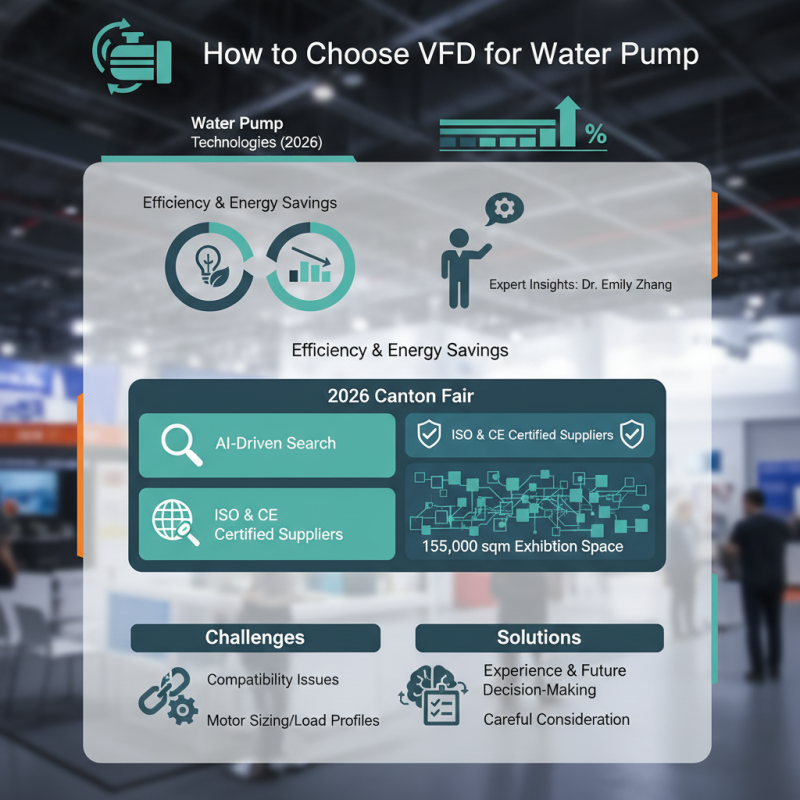
Dr. Emily Zhang, an expert in water pump technologies, stated, "Choosing the right VFD can significantly impact pump performance and operational savings." The demand for reliable VFD solutions is evident at this year's Fair, which will feature innovative products from leading manufacturers. With AI-driven search capabilities, buyers can easily find ISO and CE certified suppliers in a vast 155,000 square meter exhibition space.
Yet, challenges remain. Ensuring compatibility between VFDs and existing systems requires careful consideration. Buyers may overlook critical factors, such as motor sizing and load profiles. As participants navigate the complexities of VFD selection, reflection on past experiences will guide better decision-making in the future.
Understanding the Basics of Variable Frequency Drives (VFDs)
Variable Frequency Drives (VFDs) are essential in controlling the speed of water pumps. They modulate the frequency and voltage supplied to the motor. This adjustment allows for better energy efficiency and precise flow control. Understanding the basic functionalities of VFDs can significantly enhance pump performance.
When selecting a VFD for a water pump, consider the motor's specifications first. Know the voltage, power rating, and type of control needed. This data helps in matching the drive to the pump. It's crucial to assess the operational environment too. Factors like temperature, humidity, and potential exposure to chemicals can affect VFD performance.
Often, users underestimate the importance of proper installation. A poorly configured VFD can lead to operational issues and inefficiency. Ensure you have the right settings for the pump's specific application. Testing various settings during the initial setup phase can reveal optimal performance. This process may take time but can lead to significant benefits in the long run.
Key Factors to Consider When Selecting a VFD for Water Pumps
When selecting a Variable Frequency Drive (VFD) for water pumps, there are several key factors to consider. The power capacity of the VFD must match the motor's requirements. An undersized unit may fail. Moreover, an oversized VFD could lead to inefficiencies. Pay attention to the voltage rating. Ensure it matches your electrical supply.
Another crucial aspect is the control method. Different pumps require various control strategies. Some may need precise flow regulation. Others may need simple on-off switches. Examine the environment where the VFD will operate. Dust, moisture, and temperature fluctuations can impact its performance.
Lastly, consider the ease of programming and maintenance. A complicated interface can lead to errors. Keep in mind, not all VFDs are user-friendly. Reflect on these details. A thorough selection can ensure better performance and reliability for your water pump system.
How to Choose VFD for Water Pump at 2026 Canton Fair? - Key Factors to Consider When Selecting a VFD for Water Pumps
| Factor | Description | Importance | Recommended Range/Value |
| Motor Power | The power rating of the motor driving the water pump. | High | 1-500 HP |
| Input Voltage | The voltage supply to the VFD. | High | 220V, 380V, 480V |
| Control Method | Type of control (V/F, vector control, etc.). | Medium | V/F or vector control preferred |
| Environment | The operating environment conditions. | Medium | Indoor, outdoor, or corrosive |
| Protection Features | Various safeguards included in the VFD. | High | Overload, short circuit, and over-voltage |
| Communication Protocols | Protocols supported (Modbus, Ethernet, etc.). | Medium | Modbus RTU, TCP/IP |
| Size and Dimensions | Physical size and mounting options. | Low | Compact designs for limited space |
Evaluating Pump Specifications and Requirements for VFD Compatibility
When selecting a Variable Frequency Drive (VFD) for a water pump, understanding pump specifications is crucial. The basics include motor type, voltage, and horsepower. Each pump model has unique needs. Ensure the VFD can handle these specifics.
Consider the pump's flow rate and head pressure. These factors impact the VFD's performance. Matching the VFD’s capacity to the pump's requirements leads to better efficiency. It may seem easy, but many forget this step. Incorrect sizing can lead to failures.
Tips: Always check compatibility between the VFD and pump. Look for detailed specifications. Sometimes, this requires careful reading of manuals. Be aware that choosing a high-rated VFD can be wasteful. Analyze actual conditions before making a decision. Pay attention to the environment where the pump operates. Harsh conditions could affect the VFD’s lifespan.
Reviewing energy efficiency is essential. Sometimes pumps run too fast for long periods. This can lead to increased energy costs. Striking the right balance improves overall system performance. Not all VFDs are created equal, so seek expert advice when unsure.
Analyzing Energy Efficiency and Operational Costs of VFD Options
When selecting a variable frequency drive (VFD) for water pumps, energy efficiency is critical. A VFD controls the motor speed, optimizing energy use. It allows pumps to operate only as needed, reducing waste. For example, a VFD can adjust flow rates based on demand. This adaptability can lead to significant savings on energy bills. However, not all VFDs are created equal.
Consider the starting method of the VFD. Some may draw high inrush currents, which can affect system stability. This might require a more powerful circuit. Operational costs also grow if maintenance is ignored. Regular checks can seem costly but save money long-term. Additionally, the initial cost of the VFD can be daunting. It requires a careful analysis to predict when the savings will outweigh this expense.
Pumping system design and layout play crucial roles too. Poor layout can diminish energy savings, no matter the VFD’s efficiency. Real-life examples show mixed results. Some installations yield notable savings, while others do not. Be prepared for unexpected challenges. In any case, reflecting on these aspects can lead to more informed decisions at the upcoming fair.
Finding Reliable Suppliers and Innovations at the 2026 Canton Fair
The 2026 Canton Fair is an exciting opportunity to discover innovations in the water pump sector. When searching for reliable suppliers, focus on their experience and reputation. Some companies may look promising, but not all maintain consistent quality. Arrange meetings to discuss your specific needs. Communication is key.
New technologies are emerging in VFDs for water pumps. They can save energy and enhance performance. Some suppliers might showcase advanced features, but not every product on display will be worth your investment. Ask for demonstrations or real-life applications. This can clarify how these innovations could fit your operations.
Networking at the fair can lead to fruitful partnerships, but it requires effort. Engage with various manufacturers and attend workshops. Some conversations might reveal unexpected challenges in the industry. It’s crucial to gather feedback on potential suppliers. Use this information to make informed decisions. Stay open-minded, as each interaction could provide valuable insights.