2026 How to Choose the Best UV Flatbed Printer for Your Business?
In today's rapidly evolving printing landscape, selecting the right UV Flatbed Printer is crucial for business success. The global UV flatbed printer market is projected to reach USD 2.09 billion by 2026, growing significantly due to increased demand for versatile printing solutions. Companies must consider factors like print quality, speed, and media compatibility when making their choice. A good printer can enhance product offerings and improve operational efficiency.
However, the decision is not straightforward. Many businesses struggle with assessing their current needs versus future capabilities. Some printers may promise high speeds but deliver lower quality on textured surfaces. It's essential to weigh these trade-offs carefully. Additionally, businesses must consider the printer's longevity and the availability of consumables, which can impact operational costs over time.
Investing in a UV Flatbed Printer requires a balance of expertise and practical understanding. Companies should engage with industry reports and case studies. Learning from others ensures informed decision-making. The right choice can position a business ahead of competitors, while a hasty selection may lead to regret.
Understanding UV Flatbed Printers: Key Features and Technology
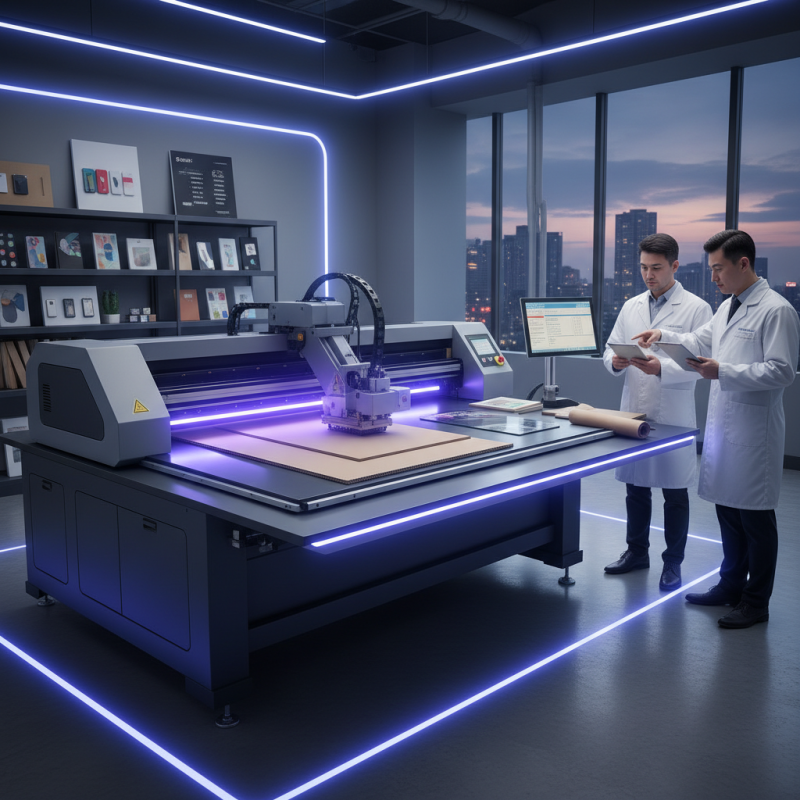
UV flatbed printers have transformed the printing industry with their innovative technology. These devices utilize UV light to cure ink instantly, providing sharp and durable prints on various substrates. Their versatility allows them to print on materials ranging from wood to acrylic. The combination of speed and precision makes them popular in commercial applications.
When evaluating a UV flatbed printer, consider key features like print resolution and speed. High resolution ensures that intricate designs and details are well-represented. Speed is crucial for meeting tight deadlines. Moreover, examine the size and compatibility with different media. A larger bed allows for bigger projects but may come with a higher price tag. Ensure the printer can handle your specific materials and requirements.
Investing in a UV flatbed printer is not just about the initial cost. Evaluate the long-term efficiency and support available. Some models may require more maintenance than others. Researching user reviews can provide insights. Look for feedback from professionals who have firsthand experience. It's essential to weigh the pros and cons before making a decision.
Evaluating Your Business Needs and Printing Requirements
When selecting the right UV flatbed printer, it's crucial to assess your specific business needs and printing requirements. Understanding the materials you intend to print on is essential. Do you need to print on metal, wood, or acrylic? Each substrate requires different ink formulations and printer capabilities. Consider the thickness and dimensions of the materials. Some businesses have bulky items, while others focus on smaller products. This impacts the size of the printer you should consider.
Another factor is the volume of prints you expect to produce. Are you a small business with limited printing needs, or a larger operation with high-volume production? This will influence your choice of printer speed and output quality. For example, high-speed printers can boost productivity but may compromise color accuracy. It's important to find a balanced solution that meets your output expectations without overspending on unnecessary features.
Consulting with industry experts or experienced users can provide valuable insights. Not all printers are created equal, and understanding their strengths and weaknesses is key. Be open to feedback and learn from others' experiences. This approach can help you avoid costly mistakes and find the printer that truly aligns with your business vision.
2026 How to Choose the Best UV Flatbed Printer for Your Business?
| Feature | Importance Level | Recommended Specification | Notes |
| Print Resolution | High | 1200 dpi | For high-quality output |
| Print Size | Medium | Up to 4x8 ft | Versatile for various substrates |
| Speed | High | Up to 50 sqft/hr | Affects production capacity |
| Ink Type | High | Eco-solvent or UV-curable | Durability and vibrancy |
| Ease of Use | Medium | User-friendly interface | Simplifies training process |
| Maintenance | High | Low-maintenance design | Reduces downtime |
| Software Compatibility | Medium | Supports major design software | Enhances workflow efficiency |
| Price | High | $20,000 - $50,000 | Budget considerations |
Comparing Brands and Models: What's on the Market in 2026?
In 2026, the UV flatbed printer market is diverse and competitive. Various brands offer a range of models, each with unique specifications. A recent industry report indicates that the global UV printer market will grow at a CAGR of over 8.5% from 2023 to 2030. This growth highlights the importance of selecting the right printer for your business.
When comparing models, consider print speed, resolution, and versatility. The ability to print on various substrates is crucial. Many printers can handle materials like wood, metal, and glass, which adds to their appeal. However, not all models excel in every area. Some printers may have high speeds but lower resolutions. Others may deliver exceptional quality but at a slower rate. These trade-offs are vital to consider.
In 2026, sustainability is a key concern. More manufacturers are incorporating eco-friendly inks and energy-efficient technologies. Still, the market struggles with consistency in quality across different brands. As you evaluate options, ensure you consider user reviews and expert opinions. Practical feedback from current users can uncover critical insights. This depth of information can guide your decision-making effectively.
Cost Analysis: Budgeting for Purchase and Maintenance
When considering a UV flatbed printer, cost is crucial. The initial purchase price can vary widely. Basic models might be affordable but often lack advanced features. These features can enhance production efficiency. On the other hand, high-end models have better print quality and durability. Assess what your business truly needs.
Maintenance costs also play a significant role. Regular servicing is necessary for peak performance. Expenses for replacement parts can add up quickly. Many forget these ongoing costs when budgeting. It's essential to plan for them. Unexpected repairs can disrupt workflow and impact profits.
Look into potential training costs for your team. Familiarizing them with the equipment can enhance productivity. Sometimes investing in training pays off in efficiency and output. Lastly, consider energy consumption. Some printers may require more power than others. An energy-efficient model can save money in the long run. Balancing these costs will lead to a more informed purchase decision.
2026 Cost Analysis of UV Flatbed Printers
This chart illustrates the cost analysis for a UV flatbed printer setup in 2026, detailing the purchase cost, maintenance costs, ink costs, and electricity costs associated with running the printer.
Making the Right Decision: Expert Tips and Recommendations
Choosing the right UV flatbed printer can be daunting. It's essential to weigh the specific needs of your business. Look at your production volume and the materials you'll use. Consider whether you need high resolution or faster print speeds. These factors significantly impact your final decision.
Consult experts or peers who have experience with flatbed printers. They can offer valuable insights and recommendations based on real-world situations. Don’t just rely on marketing materials. Understand the strengths and weaknesses of different models. Testing a printer before purchasing can reveal flaws that statistics may hide.
Be aware of your long-term needs. What works today might not suit your future projects. Ask yourself if the printer can adapt to new technologies or materials. This adaptability can be a game-changer for evolving businesses. Remember, a printer is an investment. Take your time to ensure you make an informed choice. This decision could define the quality and efficiency of your production line for years.