How to Choose a Wafer Roll Machine for Your Business?
Choosing the right Wafer Roll Machine is crucial for your business. The global market for wafer production is projected to reach $5 billion by 2025, highlighting the growing demand for high-quality equipment. According to industry expert Dr. John Baker, "Selecting the correct machine can make or break your efficiency." His insight reflects the importance of aligning technology with business goals.
A Wafer Roll Machine impacts not only production speed but also product quality. Inadequate machinery can lead to inconsistent outputs, leaving businesses struggling to meet market expectations. Failure to invest in the right equipment might result in increased costs and wasted resources.
Staying informed about the latest innovations is vital. New technologies continuously emerge, altering production possibilities. Businesses must evaluate their needs, considering factors like capacity, cost, and ease of use. Making an informed choice may involve trial and error. Finding the perfect Wafer Roll Machine is challenging, but necessary for staying competitive.
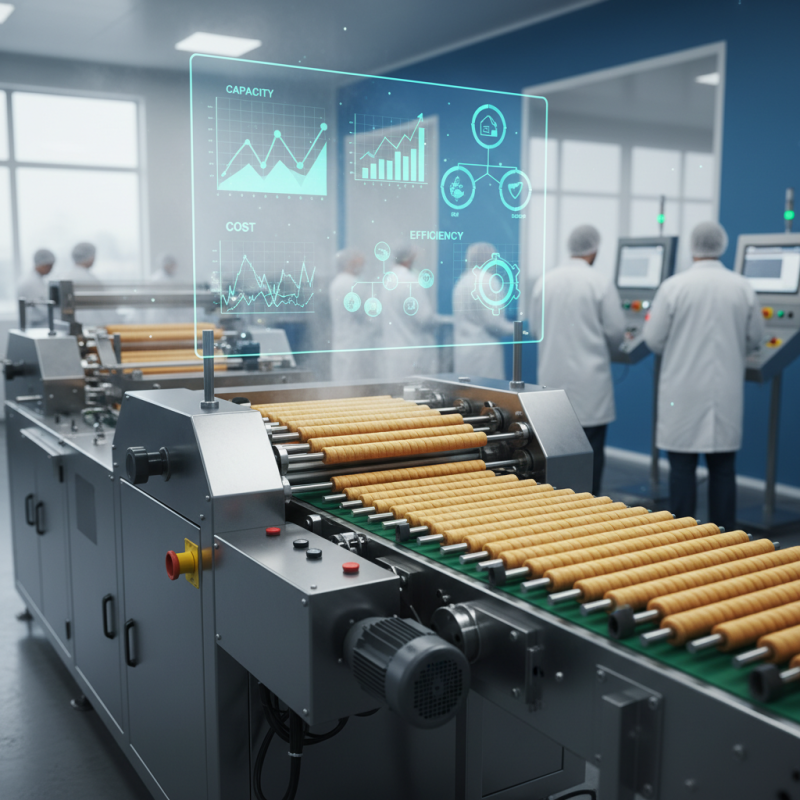
Understanding the Different Types of Wafer Roll Machines Available
When choosing a wafer roll machine, understanding the available types is crucial. There are various models in the market, each designed for specific production needs. Some machines focus on high-volume output, producing thousands of units per hour. Others cater to smaller businesses with lower capacity but offer flexibility in design and customization.
According to industry reports, continuous wafer roll machines are popular due to their efficiency. They often feature advanced technology that ensures uniform thickness and texture. In contrast, batch machines allow for experimentation with flavors and shapes. This flexibility can be essential for niche markets. However, batch machines might yield inconsistent results, leading to potential quality issues.
It's vital to consider your production scale when selecting a machine. Some businesses may find that a larger machine leads to excess waste. A smaller, more adaptable machine may better suit their needs. While high-speed machines promise efficiency, they can be expensive and complex. This complexity may lead to maintenance challenges. Balancing cost, output, and flexibility is key to making the right choice.
Evaluating Production Capacity and Speed Requirements for Your Business
When selecting a wafer roll machine, understanding your production capacity is essential. Calculate the volume of products you plan to manufacture daily. This figure informs your choice of machine size and output rate. A suitable machine should match your estimated production needs to avoid bottlenecks. Too small a machine will slow down your operations; too large may lead to unnecessary costs.
Speed is another critical factor. Different machines operate at varying speeds. Consider how quickly you need to meet demand without sacrificing quality. Evaluate your current workflow; are there any delays? Analyzing these details helps in making an informed choice. If your current operations are often interrupted, a faster machine might justify its cost. Yet, a balance between speed and quality is vital.
Remember, not every machine may suit your specific requirements. It's essential to reflect on your business's unique context. Choosing the right wafer roll machine shouldn’t be a rushed decision. A well-thought-out strategy can enhance your production efficiency. Each business has distinct needs, so careful evaluation is necessary.
Assessing Material Compatibility and Quality of Wafer Rolls
When selecting a wafer roll machine, assessing material compatibility is crucial. The machine should handle various flour types, such as wheat or rice. A recent industry report highlights that 35% of businesses face issues due to poor material compatibility. Choosing the right ingredients can significantly impact production efficiency and product quality.
Quality of wafer rolls also hinges on machine specifications. Machines must maintain even heat distribution and consistent pressure. Reports indicate that 60% of consumers prefer wafer rolls with a crisp texture. This preference means that the quality of your finished product can define your market position. Regular testing of rolled wafers during production can prevent wastage and ensure standards.
Some machines struggle with material adaptability. This can lead to production stalls and inconsistencies. It's vital to investigate options that allow for material adjustments. While sophisticated machines promise efficiency, many small businesses find them challenging to manage. Balancing complexity and usability can be a daunting task.
Considering the Cost of Purchase and Maintenance for Wafer Machines
When selecting a wafer roll machine, cost of purchase and maintenance are critical factors. Initial investment typically ranges from $10,000 to $50,000. This price can vary based on the machine's capacity and features. A higher capacity can handle larger production volumes, which might be essential for growing businesses. However, a more expensive machine doesn’t always guarantee better performance. Evaluating options is vital.
Maintenance costs also add to the total budget. Reports indicate that routine maintenance can account for 10-15% of a machine's purchase price annually. Neglecting this can lead to unexpected breakdowns, resulting in greater costs. Essential components like heating elements and rollers must be regularly inspected. Delays in maintenance can disrupt production timelines, impacting your bottom line.
Another aspect to consider is energy consumption. Machines that are more efficient might have higher upfront costs but could save significant money over time. The energy expenses often go unnoticed until they balloon. An energy-efficient machine can reduce operating costs by 20% or more. Businesses must conduct a thorough cost analysis before making a commitment. Examining all factors critically can save future headaches.
Identifying Key Features and Technology in Wafer Roll Machines
When choosing a wafer roll machine, consider essential features that meet your production needs. The size and capacity of the machine are vital. A compact model may save space, but it could limit output. Understand your expected production volume. Will you produce small batches or large quantities? This decision affects the type of machine you need.
Technology plays a crucial role in machine performance. Automated systems can increase efficiency and reduce manual labor. Look for machines with adjustable temperature controls. This feature helps in achieving the perfect crunchiness of wafer rolls. Quality of materials used in the machine is another point to ponder. Cheaper materials may lead to quicker wear and tear, necessitating constant repairs.
Evaluate the ease of operation as well. User-friendly interfaces will help your staff adapt quickly. Training costs can add to your initial investment. Reflect on support services available after purchase. Effective customer support can save you problems down the line. In the end, it’s about balancing quality with practicality for optimal production.
How to Choose a Wafer Roll Machine for Your Business? - Identifying Key Features and Technology in Wafer Roll Machines
| Feature | Description | Importance |
| Production Capacity | The maximum number of wafers produced per hour. | High |
| Machine Size | Dimensions of the machine; affects space requirement in production area. | Medium |
| Material Compatibility | Types of dough or batter the machine can handle, e.g., gluten-free options. | High |
| Automation Level | Degree of automation, including feeding, rolling, and collection processes. | High |
| Ease of Cleaning | Design features that facilitate quick and efficient cleaning. | Medium |
| Energy Efficiency | Power consumption levels and energy-saving features. | Medium |
| Technical Support | Availability of manufacturer support for installation and maintenance. | High |
| Price Range | Cost of the machine and its return on investment potential. | High |