Best Roll Lamination Machine for Your Business Needs?
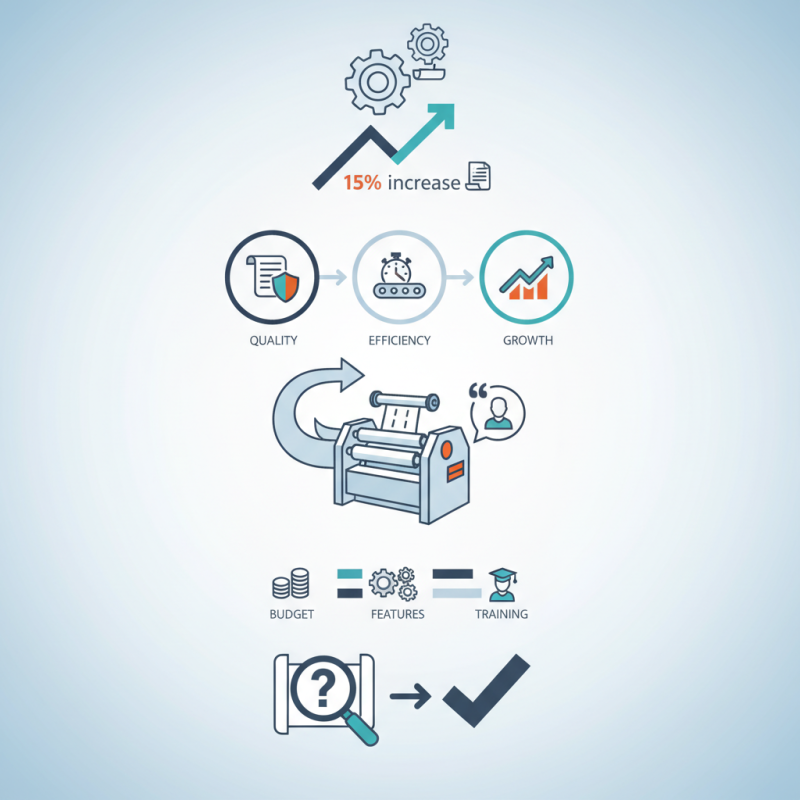
In today’s competitive market, selecting the right Roll Lamination Machine is essential for businesses striving for quality and efficiency. According to industry reports, the demand for these machines has increased by 15% over the past year. Companies recognize the importance of preserving documents and enhancing their visual appeal through lamination.
John Smith, a leading expert in the roll lamination field, emphasizes, "Investing in a high-quality Roll Lamination Machine can transform your production process." This statement reflects a growing consensus in the industry. Businesses often overlook the long-term benefits of these machines. Choosing poorly can lead to wasted materials and time, which could be avoided with careful research.
Additionally, factors like budget, machine features, and user training are significant. A well-informed decision can lead to improved operational efficiency and reduced costs. However, many businesses still hesitate to upgrade their equipment. Understanding the nuances of Roll Lamination Machines is crucial. Making the right choice requires more than just reading reviews; it demands a thorough analysis of one’s specific needs.
Understanding Roll Lamination: Types and Applications in Industry
Roll lamination is a versatile process used widely in various industries. It involves encasing documents in a protective film through heat and pressure. This method enhances durability and gives documents a professional finish. It's often seen in schools, offices, and print shops, where quality preservation is crucial.
Several types of roll lamination machines exist. Hot lamination is popular for its strong adhesion and clarity. Cold lamination offers ease of use, requiring no heat. However, many users find it less durable over time. Notably, different sizes accommodate varying needs. A smaller machine may suit a classroom, while a larger one fits commercial enterprises.
Choosing the right machine isn't straightforward. Users often face challenges such as cost, efficiency, and user-friendliness. Many machines have complex settings that can lead to frustration. Testing different machines may yield better insight into their practicality. Understanding the specific applications in your business is key to making an informed choice.
Key Features to Consider When Selecting a Roll Lamination Machine
Choosing the right roll lamination machine is crucial for any business involved in printing or document protection. One of the key features to consider is the machine's speed. A faster machine can significantly improve productivity. However, too much speed can lead to mistakes. Precision matters, and finding the right balance is essential.
Another vital feature is the machine's capacity. Consider the maximum thickness of the material it can handle. You want a machine that accommodates various substrates without jamming or misaligning. Pay attention to the type of lamination film as well. Some machines handle thermal film better than pressure-sensitive film. Doing your homework will save you trouble later.
The ease of use is also important. Look for machines with user-friendly controls. Complicated settings may lead to frustration among staff. Maintenance should be straightforward too. Consider whether parts are readily available and easy to replace. A complicated machine may end up costing you more time and money in the long run.
Performance Metrics: Speed, Efficiency, and Output Quality in Lamination
When choosing a roll lamination machine, performance metrics are crucial. Speed is one of the most vital factors. Modern machines can achieve speeds of 60 to 100 feet per minute, significantly impacting productivity. However, it’s not just about speed. A machine that operates too quickly may lead to poor lamination quality, which can frustrate operators.
Efficiency plays a key role as well. According to industry reports, an efficient lamination machine can reduce film waste by up to 20%. This reduction is essential for cost-saving, especially in high-volume operations. The optimal balance of speed and efficiency can be difficult to achieve. Companies often find that a machine that prioritizes speed can compromise output quality.
Output quality is another critical metric. High-quality lamination protects documents and enhances their appearance. Poorly laminated materials can result in bubbling or uneven surfaces, which diminishes professionalism. To mitigate this risk, it's advisable to consider machines that offer adjustable temperature and pressure settings. These features allow for greater control and can improve the overall finish, yet they may require a steeper learning curve for staff. Balancing these aspects requires reflection and careful consideration of business needs.
Performance Metrics of Roll Lamination Machines
Cost Analysis: Budgeting for Roll Lamination Machine Investment
Investing in a roll lamination machine is a significant decision. A careful cost analysis is essential. For small to medium businesses, the initial investment can range from $5,000 to $20,000. This price varies depending on the machine's capabilities and features. However, businesses must consider long-term costs as well.
Running a roll lamination machine incurs ongoing expenses. Electricity and maintenance costs can add up. According to a recent industry report, maintenance typically costs around 5-10% of the machine’s purchase price per year. Businesses should budget accordingly. Additionally, the film used for lamination also impacts overall costs. The average cost of lamination film ranges from $0.15 to $0.50 per linear foot. These costs can have a significant impact on your budget.
In some cases, businesses may underestimate their needs. For instance, if high volume is expected but the machine is underpowered, it could lead to inefficiencies. It’s crucial to assess production goals accurately. Insufficient equipment can hinder operations. Spending on the right equipment upfront may prevent larger costs in the future. Analyzing costs meticulously is vital for making the best choice.
Best Roll Lamination Machine for Your Business Needs - Cost Analysis
| Model | Max Width (inches) | Speed (ft/min) | Price ($) | Warranty (years) | Features |
| Model A | 25 | 15 | 1500 | 2 | Quick setup, Energy-efficient |
| Model B | 30 | 12 | 2000 | 3 | User-friendly interface, Compact design |
| Model C | 27 | 18 | 1200 | 2 | High precision, Adjustable speed |
| Model D | 28 | 16 | 1750 | 2 | Durable, Multi-layer lamination |
| Model E | 32 | 14 | 2500 | 5 | Fast heating, Auto shut-off |
Maintaining Your Roll Lamination Machine: Best Practices and Tips
Maintaining your roll lamination machine is crucial for ensuring quality output. Regular inspections can identify potential issues before they escalate. Check for alignment and feeding mechanisms to avoid jams. Lubricating moving parts helps maintain smooth operation. Yet, many overlook this step, leading to friction and wear.
Temperature and humidity can affect lamination quality. It’s vital to store lamination materials in a controlled environment. This can prevent warping or bubbling. A simple humidity meter can be a good investment. However, even experienced operators sometimes forget this. Consistent monitoring is key.
Cleaning your machine regularly enhances its longevity. Dust and adhesive residue can accumulate over time. A thorough clean keeps the machine performing optimally. Still, operators often rush this process. Take the time to do a complete job. It pays off in the long run. A well-maintained machine is a reliable machine.