
1-208-754-4884

Where to Buy the Best Prehung Doors in China?

Buying Prehung Doors in China can offer access to broad product ranges, configurable finishes, and competitive factory pricing. Yet a low quotation tells only part of the story. Buyers should compare door dimensions, frame materials, core construction, hardware, and surface finishes before choosing a supplier. Details matter. A frame that looks suitable in a product photo may not match the opening or installation method at the project site.

This guide explores where to find dependable Chinese manufacturers and how to assess them with practical questions. It covers factory credentials, sample review, production capacity, quality checks, packaging, and shipping coordination. Ask for clear specifications and recent project references, then compare samples under ordinary room lighting. Check how the doors handle moisture, daily use, and local climate; performance can vary by construction and finish. Do not rely on polished catalogs alone. Even a careful review has limits, and supplier information should be independently verified. That step is easy to overlook. With a measured approach, buyers can narrow their options, reduce avoidable surprises, and select Prehung Doors that suit their building requirements, budget, and installation plan.
Where to Buy the Best Prehung Doors in China?

Define a Prehung Door by Its Slab, Frame, Hinges, and Hardware

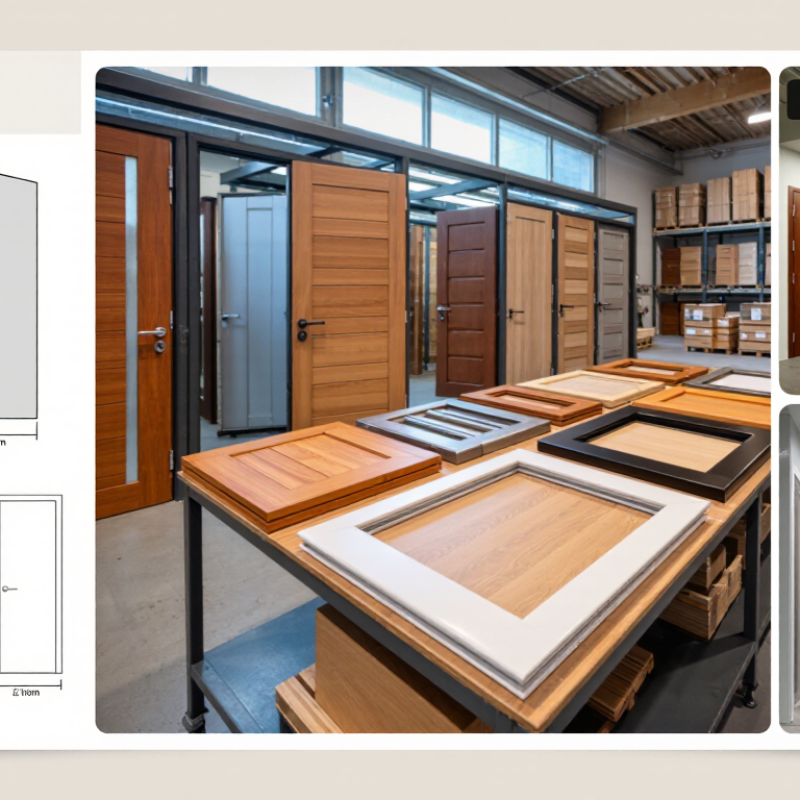
A prehung door is more than a door slab in a frame. It is a coordinated assembly of the slab, frame, hinges, and selected hardware. When comparing suppliers in China, ask for specifications covering all four parts. The slab’s material, thickness, finish, and core affect its weight and feel. Check how the edges are sealed, especially for rooms where humidity changes. Small details matter. The frame must match the wall opening and finished wall thickness. Confirm jamb dimensions, handing, and whether casing is included. A frame that looks right in a product photo may not fit your site.

Hinges connect the slab to the frame, so their size, finish, quantity, and placement should be documented. Ask whether hinge recesses are cut at the factory or left for site fitting. The hardware may include a latch, handle, strike plate, and fasteners, but “hardware included” can mean different things. Get an itemized list. Before ordering, request drawings and a sample assembly when practical. Compare measurements, surface finish, and packaging details, not just the quoted price. A checklist can still miss something; I would double-check swing direction, since that small mistake is frustrating to correct after delivery. A clear specification makes supplier comparisons more reliable.

Compare China’s Factory-Direct, OEM, and Exporter Supply Channels

Where to Buy the Best Prehung Doors in China?
Compare China’s Factory-Direct, OEM, and Exporter Supply Channels

China’s prehung-door suppliers generally fall into three channels: factories, OEM manufacturers, and exporters. Buying factory-direct can provide closer access to production details, such as frame material, hinge placement, and finish options. It may also require more hands-on coordination. Ask for a written specification and confirm what the quoted price includes.

OEM suppliers make products to a buyer’s specifications, which can help when matching a project’s dimensions or finish schedule. Check how they handle sample approval, production changes, and quality inspections. A sample can look right under showroom lighting but different beside a window. Details matter.

Exporters can simplify communication, packaging, and shipment coordination, especially for buyers managing several product types. Their prices may include services that a factory quote leaves out, so compare itemized costs rather than headline figures. Request recent production photos, packaging details, and inspection records where available. Ask for evidence. Still, no checklist removes every delay, and custom sizes can complicate scheduling. Choose the channel that fits your technical support needs, order volume, and ability to verify specifications before production.

Verify Fire-Door Claims Against GB 12955-2008 Ratings: 0.5–3 Hours

When sourcing prehung doors in China, treat fire performance as a documented specification, not a sales phrase. GB 12955-2008 classifies fire doors by rated duration, including 0.5, 1, 1.5, 2, and 3 hours. Ask for the applicable test report and confirm the stated rating matches the exact door model. Check that the tested configuration includes the frame, hinges, latch, seals, and any glazing. A strong door leaf alone does not prove the complete assembly meets its claimed rating.

Tips: Compare the report details with the product label and purchase documents. Request clear photos of the label, frame profile, seals, and hardware. Confirm who tested the assembly and whether installation instructions match your project. A certificate can look convincing, yet still describe a different configuration. Paperwork is a useful start, not the whole inspection.

Before ordering, ask the supplier how each prehung unit is packed and protected against moisture or impact during transit. Check dimensions, wall opening requirements, handing, and permitted hardware changes in writing. Small changes can matter. I would also ask for a sample or a third-party inspection when feasible; this adds time and cost, but relying only on polished documents may be a mistake. Keep the answer specific to the selected rating and installation conditions.

Assess Materials, Dimensions, Finishes, and Quality-Control Records

When buying prehung doors in China, assess the complete assembly, not just the door leaf. Ask for the core type, frame material, veneer or coating specification, and batch-specific moisture records. Compare the leaf, jamb, and rough-opening dimensions separately; a few millimeters can complicate installation. Check finish samples in daylight, especially around edges and hinge cutouts, where uneven coating may show. Request inspection records that identify sampling frequency, measured defects, and equipment calibration dates. A certificate alone does not prove every shipment was checked.

Quality also has a wider footprint. The 2022 Global Status Report for Buildings and Construction, published by UNEP and GlobalABC, estimated that buildings used 34% of global energy and produced 37% of energy- and process-related CO₂ emissions in 2021. This is not a door-specific figure, but it supports asking suppliers about material sourcing, durability, and documented production controls. One easy mistake is choosing a polished sample before confirming that the delivered batch uses the same finish and construction. No checklist catches everything.

Tips: Request a pre-shipment photo set and one production-batch inspection report. Keep one approved finish sample for comparison. Small details matter. Verify swing direction, hinge positions, and frame depth against your site measurements before ordering.

Where to Buy the Best Prehung Doors in China?

Compare materials, dimensions, finishes, and quality-control records before choosing a supplier.

The chart compares illustrative door-leaf size combinations; areas are calculated from width × height and are not a China-wide standard or market survey. Confirm the finished opening, frame dimensions, wall thickness, and on-site measurements with the supplier. Also request material specifications, finish samples, and documented inspection records for dimensional accuracy, assembly, and surface quality.

Confirm Samples, Export Packaging, and Shipping Terms Before Ordering

The best place to buy prehung doors in China is not always the supplier with the lowest quote. Look for a manufacturer that can explain its door construction, frame options, hardware preparation, and quality checks. Ask for recent production photos and a written specification before comparing prices. A factory visit or independent inspection can add confidence, but neither replaces a physical sample. Details matter.

Order a sample built to the same specification as your planned shipment. Check the slab thickness, jamb depth, hinge positions, latch bore, swing direction, and finish under natural light. Test the frame on a level floor, and note any gaps or sticking. Check carefully. One sample may not reveal batch variation, so request a documented tolerance range. Small measurement differences can create avoidable work during installation.

Confirm export packaging in writing. Each unit should have protected corners, separators to prevent rubbing, and restraints against movement inside the container. Ask how the supplier manages moisture exposure during storage and transit. Then agree on the shipping term, named port or destination, loading date, insurance responsibility, and required documents. Avoid relying on “shipping included”; the phrase can mean different things. Request a packing list, final inspection records, and clear photos before dispatch. These checks take time, and delays are still possible, so allow some flexibility in the schedule.

Where to Buy the Best Prehung Doors in China? - Confirm Samples, Export Packaging, and Shipping Terms Before Ordering
Buying Dimension What to Confirm Practical Data or Benchmark Evidence to Request
Supplier channel Compare manufacturers, sourcing agents, and trading companies based on product control, communication, and export support. The supplier type alone does not establish product quality. Confirm who makes the door set, who inspects it, and who handles export documents. Factory or production-site details, business documentation, product specifications, and a written statement of each party’s responsibilities.
Prehung set contents List every component included in the quoted price. A prehung set commonly includes a door slab, frame or jamb, and hinges. Casing, lockset, threshold, and other hardware may be optional or excluded. An itemized quotation, assembly drawing, hardware schedule, and written confirmation of exclusions.
Sample approval Approve the actual construction, finish, handing, hinge preparation, and frame details before mass production. A sample can reveal appearance and assembly details, but it does not replace confirmation of production tolerances and the final order specification. A signed sample or approval record, annotated drawings, finish reference, and a list of agreed dimensions in millimetres.
Dimensions and handing Specify slab size, overall frame size, jamb depth, opening direction, and hinge side using an agreed viewing convention. There is no single rough-opening allowance suitable for every door system. Use the supplier’s installation drawing and the project’s local building requirements. Dimensioned shop drawings showing the door, frame, swing, handing, clearances, and stated manufacturing tolerances.
Export packaging Agree protection against abrasion, impact, moisture exposure, and movement during handling and transit. Packaging should suit the door’s finish, packed dimensions, handling method, and transport route. Cartons, edge protection, separators, and crating needs vary by order. Packaging photos or a packing specification, package dimensions and gross weights, and clear carton or crate marking requirements.
Container planning Base the loading plan on final packed dimensions, orientation, protection, and weight—not just the door-slab dimensions. Approximate internal volume is about 33 m³ for a standard 20-foot container and 67 m³ for a standard 40-foot container. Actual usable space and payload depend on equipment and route. A packing list with package dimensions and weights, plus a proposed container-loading plan confirmed with the freight provider.
Shipping terms Name the agreed Incoterms® rule and the precise named place or port in the contract. Under Incoterms® 2020, FOB, CIF, and CFR are for sea or inland-waterway transport; FCA can be used for any mode. Under CIF, the seller pays freight and insurance to the named destination port, while risk transfers when goods are on board at shipment. A pro forma invoice stating the Incoterms® rule, named place or port, shipment responsibilities, and any separately quoted charges.
Inspection and timing Set inspection points and agree when production, inspection, and shipping schedules begin and end. Production time and ocean transit time are separate. Neither should be treated as a guaranteed delivery date unless the contract clearly defines the commitment and consequences of delay. A production schedule, pre-shipment inspection criteria, shipment window, and written process for reporting defects or shortages.
Documents and compliance Check import requirements for the destination market, including any applicable fire, safety, or building-code requirements. Common shipping documents include a commercial invoice, packing list, and bill of lading. Required certificates, duties, and product rules depend on the destination and product specification. Draft shipping documents for review, product test reports where required, and confirmation from the importer or customs broker about local requirements.