Top 10 Benefits of Metallurgical Bridge Cranes for Industry?
In the industrial landscape, efficiency and safety are paramount. The Metallurgical Bridge Crane stands out as a crucial tool for various manufacturing sectors. It is designed to handle heavy materials, improving productivity significantly. These cranes can lift molten metal, large machinery, and heavy components, which are common in metallurgy and manufacturing.
Many industries neglect the importance of investing in advanced cranes. However, a Metallurgical Bridge Crane can be a game-changer. It reduces manual labor and minimizes the risk of accidents. With an automated system, operations become smoother and safer. The precision of these cranes allows for smoother transitions in factories.
Yet, not all businesses fully utilize this technology. Some may overlook necessary training for operators, which is vital. Proper training ensures safety and maximizes efficiency. Investing in a Metallurgical Bridge Crane could yield substantial long-term benefits, though companies must actively seek ways to improve their operational practices.
Key Advantages of Metallurgical Bridge Cranes in Industrial Applications
Metallurgical bridge cranes are essential in industrial environments. These cranes provide significant advantages in handling heavy materials and improving efficiency. They are designed for heavy lifting tasks commonly found in metal factories. Their robust structure allows for smooth operations under demanding conditions. Many industries rely on them to enhance workflow.
One key advantage is safety. With advanced controls, workers can operate these cranes from a distance. This reduces the risk of accidents and enhances worker wellbeing. Furthermore, the cranes’ precision makes it easier to position loads accurately. This precision minimizes mistakes during transport, which can lead to costly damages.
However, not all installations go smoothly. Training is crucial for operators to ensure safe usage. Inadequate training can lead to significant errors. Additionally, regular maintenance is necessary for optimal performance. Neglecting these aspects can halt production and lead to unexpected costs. Companies must reflect on their procedures to maximize the benefits of metallurgical bridge cranes.
Enhanced Safety Features of Metallurgical Bridge Cranes
Metallurgical bridge cranes are designed with enhanced safety features that significantly benefit industrial operations. These cranes often include advanced load sensors. These sensors prevent overloading, which reduces the risk of accidents. They ensure operators can lift materials safely. The cranes are also equipped with automatic braking systems. These systems engage immediately in emergencies, protecting workers below.
Another critical safety feature is the improved visibility from the operator's cabin. Enhanced lighting and larger windows allow for a clear view of the work area. This design reduces blind spots and helps operators make better decisions. However, training is essential. Operators must understand how to react in challenging situations. Regular safety drills can improve response times during emergencies.
Not all systems are perfect. There are still cases where operators might miss a warning signal. This oversight can lead to mishaps. Ensuring that safety features function correctly is vital. Regular maintenance checks are necessary but sometimes overlooked. A focus on safety can mitigate risks and lower accident rates in the long run. Emphasizing continuous learning and adaptation is essential for the industry.
Improved Efficiency in Material Handling with Bridge Cranes
In today's industrial landscape, bridge cranes play a pivotal role in enhancing efficiency in material handling. These devices can significantly reduce the time needed for moving heavy loads, impacting overall productivity. According to a report by the Material Handling Industry of America, effective cranes can increase handling speed by up to 30%. This means faster operations and quicker delivery times.
Workers can also experience less physical strain. Ergonomic design helps to minimize injuries. A study indicated that ergonomically optimized work environments lead to a remarkable 20% decrease in workplace injury claims. Bridge cranes provide operators with better control, enabling them to manage loads safely.
Yet, despite these advantages, challenges remain. Maintenance of bridge cranes can be costly. Regular inspections are necessary to ensure safety standards. Even minor issues can lead to operational delays and increased downtime. Training programs for operators are essential but often neglected. Investing in proper training should not be an afterthought. Addressing these shortcomings is crucial for maximizing the benefits of bridge cranes in any industry.
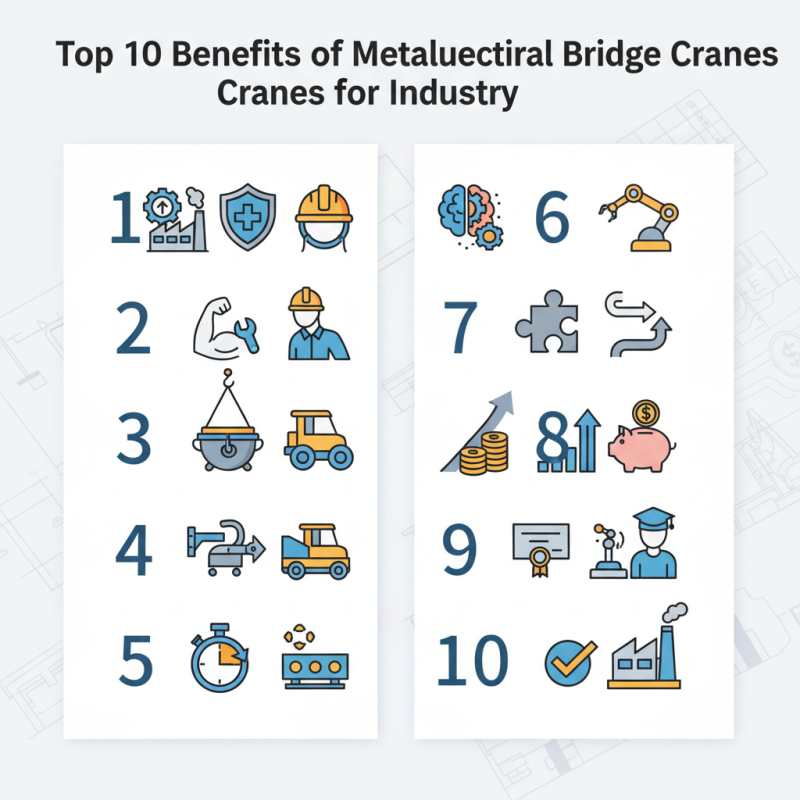
Top 10 Benefits of Metallurgical Bridge Cranes for Industry
| Benefit | Description | Impact on Efficiency |
| Increased Load Capacity | Bridge cranes can handle heavier loads compared to traditional systems. | Improving throughput by enabling the handling of larger items. |
| Enhanced Safety | Designed with safety features to reduce accidents and injuries. | Lower accident rates lead to fewer work stoppages. |
| Improved Precision | Allows for accurate placement of materials in tight spaces. | Minimizes material damage and enhances workflow. |
| Versatility | Can be adapted for various industrial applications. | Reduces the need for multiple systems, streamlining processes. |
| Reduced Downtime | Less frequent maintenance and higher reliability. | Increases operational hours and efficiency. |
| Space Optimization | Utilizes vertical space efficiently for material storage and movement. | Maximizes warehouse capacity and operational space. |
| Energy Efficiency | Modern designs focus on reducing energy consumption. | Lowers operational costs and environmental impact. |
| Operator Comfort | Ergonomic controls and design for ease of use. | Increases operator satisfaction and productivity. |
| Advanced Technology | Incorporation of smart technologies for better control. | Facilitates real-time monitoring and management of materials. |
| Increased ROI | High initial investment returns through efficiency gains. | Justifies capital expenditure by reducing long-term operational costs. |
Cost-Effectiveness of Using Metallurgical Bridge Cranes
Metallurgical bridge cranes are gaining popularity in various industries for their multiple cost benefits. These cranes significantly enhance productivity. They can lift heavy materials with ease, saving time and labor costs. Operating these cranes requires less manpower than traditional methods. This leads to a leaner operational approach.
Maintenance costs are also reduced. Metallurgical bridge cranes are built to withstand harsh environments. They require less frequent repairs, which saves money. However, initial setup costs can be high. Companies must evaluate their budget carefully. A miscalculation can lead to financial strain.
Another aspect is energy efficiency. Modern cranes are designed to optimize power usage. This not only lowers operational costs but also decreases environmental impact. Yet, every installation requires proper training for operators. Poor training can lead to accidents and increased costs. It's crucial to address these challenges thoughtfully.
Durability and Maintenance Benefits of Bridge Cranes in Heavy Industries
Bridge cranes play a crucial role in heavy industries. Their durability is one of the most significant benefits. Built to withstand harsh conditions, they often last longer than other lifting equipment. High-quality materials and sturdy designs make these cranes resilient. They handle heavy loads with ease and stability. This reliability reduces the risk of accidents. Yet, not all bridge cranes are created equal. Some may require frequent repairs, which can lead to downtime.
Maintenance is another critical aspect. Regular checks and proper upkeep extend the lifespan of bridge cranes. Simple tasks like lubricating parts can prevent major issues. Operators must be trained to spot potential problems early. However, many industries overlook this preventive maintenance. This oversight can be costly. The right maintenance schedule minimizes unexpected breakdowns and costly repairs. When cranes are well-maintained, productivity increases, and safety improves.
In conclusion, while bridge cranes offer numerous advantages, challenges remain. Companies must prioritize both durability and maintenance. Investing time in proper care can significantly enhance operational efficiency. Making improvements in these areas can lead to better overall performance.