
1-208-754-4884

2026 Best Railway Wagon Adapter for Global Buyers?

The 2026 market for railway components is becoming more demanding, especially for buyers managing different wagon fleets, track gauges, and maintenance systems. A Railway Wagon Adapter must do more than connect equipment. It should support load transfer, dimensional compatibility, controlled movement, and dependable inspection access. Small tolerances matter. A few millimeters can affect coupling performance, wheel clearance, or installation time.

UNIFE’s World Rail Market Study 2024 identifies continued growth in the global rail supply market through 2027, supported by fleet renewal, freight modernization, and infrastructure investment. UIC Railway Statistics 2024 also shows the continuing importance of rail freight in international transport networks. These trends create opportunities for suppliers, but they also increase purchasing risks. A low-priced adapter may look attractive beside a workshop pallet. Later, poor material records or unclear drawings can create expensive delays.

This guide examines the 2026 best Railway Wagon Adapter options for global buyers. It considers material strength, fatigue resistance, dimensional accuracy, surface protection, certification evidence, and after-sales support. Buyers should request test reports, production traceability, installation instructions, and realistic delivery terms. Supplier experience matters more than polished brochures. ISO 9001 certification can support process confidence, but it does not replace product-specific validation. Regional standards also differ, so one specification may not suit every wagon family. That limitation is easy to overlook. No buying guide can remove every engineering uncertainty; careful verification remains essential before approval.
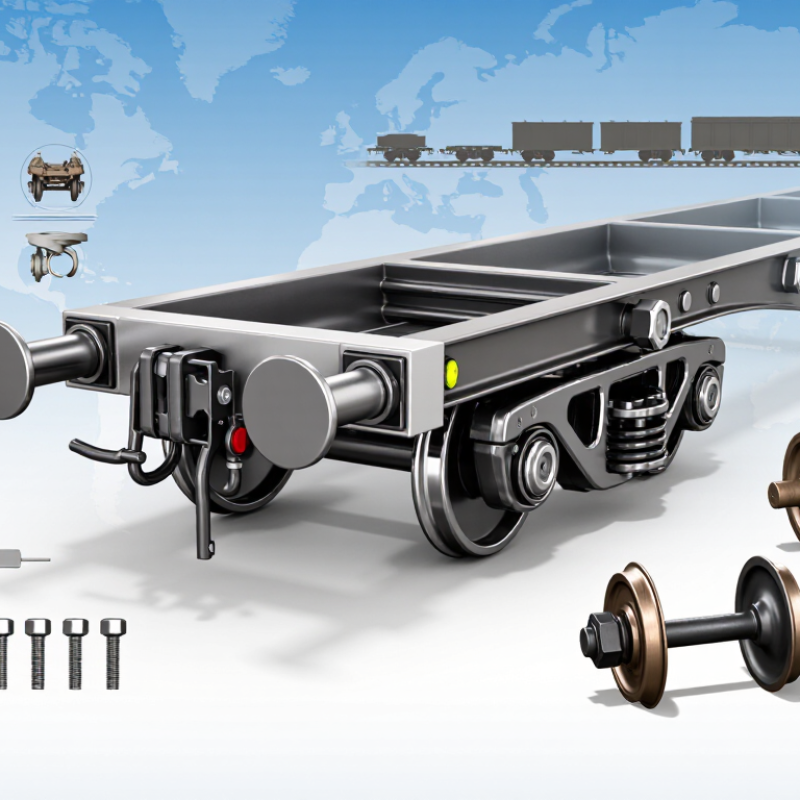
2026 Best Railway Wagon Adapter for Global Buyers?

Railway Wagon Adapters Explained: Types, Functions, and 2026 Buyer Needs

Railway Wagon Adapters: Types, Functions, and 2026 Buyer Needs

Railway wagon adapters connect freight wagons with different couplers, wheel arrangements, or loading systems. Common types include coupler adapters, bogie adapters, and container-support adapters. Each type solves a different operating problem. A coupler adapter may bridge incompatible draft systems. A bogie adapter can support safe movement between wagon designs. Container-support units help stabilize loads during rail transport.

In field inspections, fit and maintenance matter more than appearance. Buyers should check axle loads, braking compatibility, interface dimensions, and material certificates. Weather exposure also matters. Salt air, winter ice, and dust can shorten service life.

In 2026, global buyers increasingly need traceable testing, digital drawings, replaceable wear parts, and clear installation instructions. Ask for fatigue results, corrosion protection details, and inspection intervals. Do not rely on a catalogue image. It can hide practical limits.

Tips: Measure the wagon interface twice. Confirm operating temperatures and route conditions. Request a sample inspection report before ordering. Keep spare seals and fasteners available. A lower purchase price may create higher maintenance costs. Still, no adapter fits every railway network. That assumption deserves review. Pilot testing is wise when load patterns, couplers, or local maintenance skills differ.

Standards Overview: UIC, EN 12080, AAR M-924, and ISO 22163

2026 Best Railway Wagon Adapter for Global Buyers?

Selecting a railway wagon adapter requires more than matching a drawing or catalog number. UIC references support international operating compatibility, while EN 12080 addresses rolling bearing quality, testing, and performance requirements. These documents help buyers examine material strength, cleanliness, dimensional control, and fatigue resistance. However, an adapter is not automatically suitable because it meets one standard. Wheelset load, axlebox design, suspension movement, and maintenance conditions still matter. On a workshop floor, a few millimeters of mismatch can create uneven contact and accelerated wear.

Tips: Ask for the exact standard edition, test reports, heat-treatment records, and dimensional inspection data. Check whether the adapter fits the intended bearing and axlebox assembly. A supplier’s confident answer is not evidence. Independent verification is better.

For North American freight applications, AAR M-924 may define relevant requirements for roller bearing assemblies and related components. Its terminology and approval route can differ from UIC or EN practice. ISO 22163 focuses on railway quality management, traceability, risk control, and consistent production. It does not replace a product standard. Buyers should map each requirement to the wagon’s operating region and acceptance procedure. I have seen projects fail because certificates were valid, but the interface dimensions were misunderstood. That weakness deserves honest review. A complete technical file should include drawings, tolerances, material certificates, inspection results, and change-control records. Older documents may look professional. They can still be obsolete.

2026 Best Railway Wagon Adapter for Global Buyers? - Standards Overview: UIC, EN 12080, AAR M-924, and ISO 22163

Railway Wagon Adapter Standards Comparison for International Procurement
Reference Primary Scope What It Controls Adapter-Relevant Information Typical Buyer Verification Best-Fit Market or Use Case
UIC requirements International railway interoperability, running gear, wheelsets, axleboxes, and vehicle interfaces covered by the applicable UIC leaflet. Operational and interface principles, design conditions, maintenance expectations, and compatibility requirements defined by the relevant UIC document. UIC is not one universal dimensional standard for every wagon bearing adapter. The correct leaflet, vehicle design, axlebox arrangement, bearing type, load rating, and interface drawing must be identified before production. Confirm the exact applicable UIC leaflet; review approved interface drawings; check axle journal, bearing outer diameter, adapter seating, lateral guidance, clearances, and bogie compatibility. European and international projects that specify UIC-based vehicle or running-gear requirements.
EN 12080 Railway applications — Axleboxes — Rolling bearings. Quality requirements for rolling bearings used in railway axleboxes, including manufacturing quality, material control, inspection, traceability, and conformity documentation. It supports the reliability and conformity of the bearing system but does not by itself define one universal adapter profile, adapter width, or adapter material grade. Request the current edition and declared compliance; verify bearing and adapter compatibility; review material certificates, heat-treatment records where applicable, dimensional reports, non-destructive testing, and batch traceability. European rolling-stock supply chains and projects requiring EN-based axlebox bearing quality controls.
AAR M-924 North American railway roller-bearing assemblies and associated components used in freight service. Technical, manufacturing, inspection, qualification, and interchangeability requirements established for the applicable bearing and adapter assembly. The adapter must match the specified bearing assembly, journal arrangement, side-frame interface, load application, and applicable North American interchange dimensions. Exact dimensions and acceptance criteria must be taken from the current controlled revision. Confirm the current revision; verify adapter geometry against the approved drawing; check material grade, hardness, dimensional inspection, surface condition, marking, traceability, and required qualification or testing records. North American freight wagons and other vehicles designed around AAR interchange practices.
ISO 22163 Railway-industry quality management systems. Quality-management processes, risk-based thinking, product safety, project management, supplier control, traceability, nonconformity management, and continual improvement. ISO 22163 is not a dimensional or material standard for railway wagon adapters. It evaluates the supplier’s management system and process controls rather than approving a specific adapter design. Check the certificate scope, certification validity, manufacturing location, product and process coverage, calibration system, change control, corrective-action records, and lot-level traceability. Global railway procurement where structured quality assurance and controlled production processes are required.
Approved vehicle or bogie drawing Product-specific interface definition for the target wagon, bogie, axlebox, and bearing assembly. The actual adapter envelope, seating surfaces, locating features, clearances, tolerances, load-transfer surfaces, and installation orientation. This is normally the decisive dimensional reference because standards often define requirements by application or assembly rather than one globally interchangeable adapter size. Compare the supplier drawing with the latest approved vehicle documentation; confirm revision status, critical dimensions, datum scheme, tolerances, and interchangeability statement. Every procurement project, regardless of geographic market.
Material and manufacturing controls Adapter body integrity, fatigue resistance, dimensional stability, and production consistency. Material specification, casting or forging route, heat treatment where specified, machining, surface finish, inspection, marking, and traceability. The required material and process depend on the approved design and governing specification. A generic material substitution should not be accepted without engineering approval. Review material certificates, process qualification, hardness or mechanical-property results where specified, dimensional records, visual inspection, and non-destructive testing requirements. Safety-critical railway applications requiring documented production control.
Interchangeability checklist Pre-purchase technical screening. Dimensional fit, bearing compatibility, side-frame or axlebox compatibility, load capacity, installation orientation, inspection access, and maintenance requirements. A visually similar adapter is not necessarily interchangeable. Bearing designation, journal size, adapter contour, side-frame opening, and load path must all correspond. Obtain a signed dimensional drawing, 3D model where necessary, inspection plan, certificate package, sample approval procedure, and documented compatibility confirmation. Recommended for all global buyers before quotation approval or mass production.
Procurement note: No single reference listed above provides a universal adapter that fits every railway wagon. Final selection should be based on the latest applicable standard revision, the approved vehicle or bogie drawing, bearing and axlebox configuration, operating loads, and the purchaser’s inspection and documentation requirements.

Load and Fit Requirements for 20–25 Tonne Freight-Wagon Axle Loads

2026 Best Railway Wagon Adapter for Global Buyers?

Load and Fit Requirements for 20–25 Tonne Freight-Wagon Axle Loads

Selecting a railway wagon adapter starts with the axle load, not the catalogue image. A 20–25 tonne axle load creates substantial forces during braking, shunting, curves, and uneven track conditions.

The adapter must support the declared load without permanent deformation or harmful fatigue damage. Treat 25 tonnes as an operating requirement, not an automatic safety limit. Actual design loads depend on speed, suspension behavior, impact factors, and service conditions.

Fit comes first. The adapter interface should match the axle journal, bearing arrangement, wheelset geometry, bogie clearance, and track gauge. Even a small mismatch can create uneven contact, heat, vibration, or accelerated wear.

Measure critical dimensions in millimeters, including shoulder locations, seating widths, bolt patterns, and available lateral movement. Confirm material strength, heat treatment, corrosion protection, and inspection records before approving production samples. A clean drawing is useful, but a measured component is more convincing.

Global buyers should request load calculations, dimensional tolerances, fatigue evidence, and installation instructions. Testing should reflect real operating conditions, including repeated loading and temperature changes.

Transport packaging also matters; exposed machined surfaces can arrive scratched or corroded. One practical weakness is relying only on supplier drawings.

Field measurements sometimes reveal worn or modified wagon parts. That detail may change the adapter design.

Independent verification is worth the extra time, especially when wagon fleets, standards, and maintenance practices differ between regions.

Global Selection Steps: Gauge, Climate, Materials, and Traceability

Choosing a railway wagon adapter starts with gauge, not price. UIC Railway Statistics 2024 records over one million route-kilometres worldwide, with multiple gauge systems still operating. A 1,435 mm solution may fail on a 1,520 mm route. Confirm wheelset geometry, axle load, coupler height, braking interfaces, and loading limits with measured drawings. Field checks matter. Depot assumptions can be wrong.

Climate changes the material decision. The WMO State of the Climate in Asia 2023 reports that Asia has warmed nearly twice as fast as the global average since 1961. Humidity, salt spray, dust, and freeze-thaw cycles can attack welds and fasteners. Specify suitable corrosion protection under ISO 12944, then verify coating thickness and adhesion. High-strength steel may reduce weight, but fatigue performance still needs evidence. Stainless components are not automatically better.

Traceability should follow every critical part. The World Bank Logistics Performance Index 2023 evaluates tracking and tracing across 139 economies, showing its importance in supply-chain control. Require serial numbers, heat certificates, welding records, inspection results, and repair history. Digital records help, but poor data entry remains a weakness. I would also request independent load and fatigue testing. A certificate alone cannot prove field reliability. Recheck compatibility after route changes, because a technically correct adapter can become unsuitable in service.

Supplier Evaluation Using 100% Inspection, Testing, and Warranty Data

Choosing the 2026 best railway wagon adapter requires more than comparing prices or catalogue drawings. Eurostat reported approximately 378 billion tonne-kilometres of EU rail freight in 2023. That volume exposes weak components quickly. Global buyers should request 100% inspection records for dimensions, welds, torque, coating thickness, and serial traceability.

Testing must match the adapter’s operating loads, temperature range, corrosion exposure, and connection design. EN 15085-2 welding controls can support supplier evaluation, but certification alone proves little. Ask for test dates, equipment calibration, rejected-unit counts, and corrective-action records. The ERA Safety Performance Report 2024 recorded 1,517 significant railway accidents in the EU during 2022. An adapter is only one component, yet small defects can disrupt larger systems.

Warranty data should show claim rates by production batch, failure mode, mileage, and service environment. A two-year promise sounds attractive. Evidence matters more. Request anonymised field records and response-time figures. A supplier reporting zero failures deserves careful questioning; perfect data may indicate weak monitoring. I would also inspect one production sample independently, because factory reports can be accurate but incomplete. Site audits, controlled sampling, and repeat load tests reveal details that polished documents often miss.

2026 Best Railway Wagon Adapter for Global Buyers?

Supplier Evaluation Using 100% Inspection, Testing, and Warranty Data

This buyer benchmark requires complete documented evidence for every critical control point: incoming material verification, dimensional inspection, non-destructive testing, load and fatigue validation, surface protection, traceability, and warranty coverage. The 100% values represent the required evidence-coverage threshold, not a ranking of any company or brand.

Article Source: